
Your cart is currently empty!
Introduction:
Have you ever looked around your room and thought, “Everything is here, so why does it still feel like something is missing?”
I’ve noticed that an unfinished-looking room usually doesn’t need more decoration. The problem is often with a few details that were overlooked—like the wrong-size rug, bare walls, poor lighting, or furniture that doesn’t quite fit the space. Interior designers point to similar issues involving scale, proportion, lighting, window treatments, and visual balance.
And honestly, these are things we can easily miss when we see the room every day.
So before buying another vase, pillow, or piece of wall art, look at these 10 things first.
1. The Rug Is Too Small for the Furniture
A rug can make a room feel connected, but the wrong size can have the opposite effect.
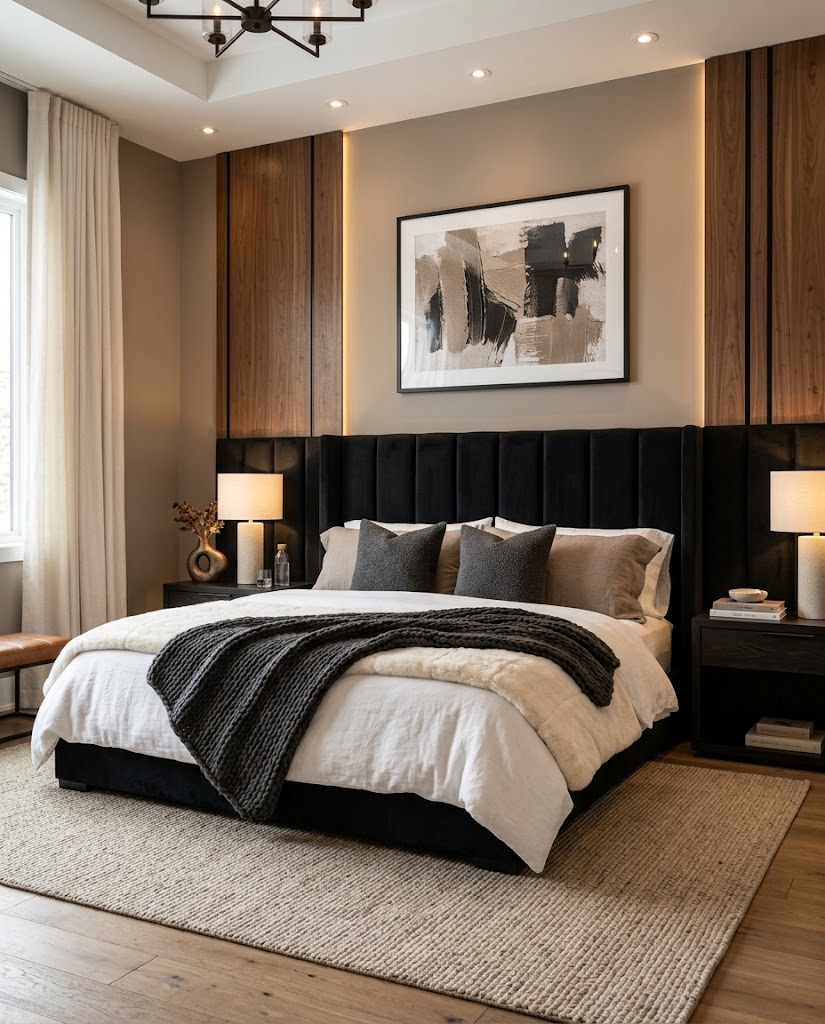
If your rug sits like a small island underneath the coffee table while the sofa and chairs are completely outside it, the furniture can feel disconnected. The same thing happens in bedrooms when a tiny rug barely reaches beyond the bed.
I always look at the rug and furniture as one group, rather than choosing the rug separately.
Try this: If possible, choose a rug that reaches under at least the front portion of the main furniture. It gives the arrangement a visual foundation instead of making everything look like separate pieces.
2. The Walls Are Bare After the Furniture Is Finished
You can have a beautiful sofa, bed, or dining table and still have a room that feels halfway done.
This often happens when we finish decorating the floor and furniture but completely forget about the walls.
I’m not saying every empty wall needs a gallery wall. One appropriately sized artwork, mirror, shelf, or another intentional feature can sometimes be enough.
The key is making the wall feel considered, rather than simply forgotten.
3. There’s Only One Light in the Room
This is one of those things you may not notice during the day.
A room can look perfectly fine in natural sunlight but feel completely different at night when the only light comes from one ceiling fixture.
A bedroom, living room, or reading corner usually feels more complete when lighting exists at different levels—such as a ceiling light, table lamp, floor lamp, or wall light. Layered lighting is repeatedly recommended as part of making a room feel more finished.
If your room feels flat at night, check the lighting before changing the furniture.
4. The Curtains Don’t Frame the Window Properly
Curtains are easy to treat as an afterthought, but they can change the proportions of an entire room.
Curtains that are too short, too narrow, or hung awkwardly around the window can make the space feel visually cramped. Properly sized window treatments can help the walls and windows feel more connected to the rest of the room.
I like to think of curtains as part of the architecture—not just something covering the window.
Before replacing them, check their length, width, and placement.
5. The Furniture Is the Wrong Size for the Room
Sometimes the furniture itself isn’t bad. It’s just wrong for the space.
A huge sofa in a small room can make everything else feel squeezed in. On the other hand, very small furniture in a large room can leave too much empty space around it.
This is why I wouldn’t choose furniture based only on how beautiful it looks in a showroom or online photo.
Measure your room first.
A piece can look amazing somewhere else and still look completely out of place in your home. Scale and proportion are major reasons designers say a room can feel “off” even when the individual pieces are attractive.
6. Everything Looks Like It Was Bought Separately
This one is subtle.
You might have a nice lamp, beautiful cushions, a good coffee table, and attractive artwork—but if none of them relate to each other, the room can feel like a collection of random purchases.
I don’t think everything needs to match. In fact, matching everything too perfectly can make a room feel flat.
Instead, repeat a few things naturally: perhaps the same wood tone, a similar color, or a material that appears in more than one place.
That small connection can make separate pieces feel like they belong together.
7. There’s No Real Focal Point
When I walk into a room, my eyes should have somewhere natural to land.
Maybe it’s a beautiful bed, a fireplace, an artwork, a statement light, or a large window.
Without a clear focal point, everything can compete for attention—or nothing feels important enough. The result is often a room that looks furnished but not intentionally arranged. Designers commonly describe visual hierarchy and focal points as important parts of a finished-looking space.
You don’t need a dramatic statement piece. Just decide what you want people to notice first.
8. The Room Has Plenty of Decor but Not Enough Texture
This is especially common in neutral rooms.
You can have white walls, a beige sofa, plain curtains, and a simple rug, but if every surface feels similar, the room can look strangely flat.
I would rather add different textures than simply add more objects.
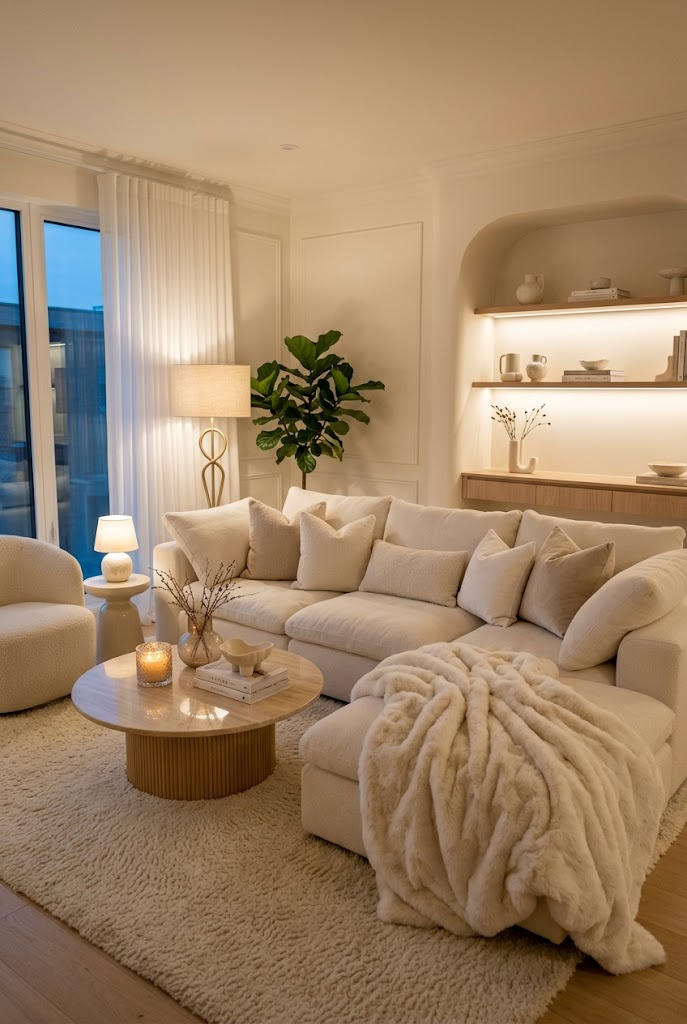
Think about a knitted throw, linen curtains, a textured cushion, wood, woven baskets, or a soft rug. You don’t need all of them—just enough variation to give the room some visual depth.
Texture is often what makes a simple room feel layered instead of unfinished.
9. Empty Spaces Are Being Filled Just Because They’re Empty
This might sound strange, but an empty corner isn’t automatically a problem.
Sometimes we see a blank shelf or empty tabletop and immediately think, “I need something there.”
Then we add a vase, bowl, candle, frame, and another little object until the room becomes crowded.
I’ve found that a room feels more intentional when every object has a reason to be there.
So before filling an empty space, ask yourself:
“Does this actually improve the room, or am I just trying to fill the gap?”
If the answer is the second one, leave it empty.
10. The Room Has No Personal Touch
This is probably the easiest one to overlook.
A room can follow every decorating trend and still feel strangely incomplete if nothing in it feels personal.
Maybe it’s a framed photograph, a book collection, something you picked up while travelling, artwork you genuinely love, or even a small object that has meaning to you.
I don’t think a finished room has to look like a showroom. It should look like someone actually lives there.
Personal pieces give the room a sense of identity that perfectly coordinated furniture alone can’t create.
Before You Buy More Decor, Check These First
When a room feels unfinished, our first instinct is usually to buy something else.
But more decor won’t fix a badly sized rug. Another cushion won’t fix poor lighting. A decorative object won’t fix furniture that’s too large for the room.
So I would pause before spending anything and check:
- Is the furniture the right size?
- Does the rug actually anchor the space?
- Are the walls completely forgotten?
- Does the room have more than one light source?
- Do the curtains frame the windows properly?
- Do the colors and materials connect?
- Is there a clear focal point?
- Does the room have enough texture?
- Am I filling spaces unnecessarily?
- Does anything here actually feel like me?
A finished room isn’t necessarily a room filled with things. It’s a room where the things you already have feel connected, balanced, and intentional.
And honestly, sometimes the best “decorating” you can do is simply remove one thing, move one thing, or fix one thing that was slightly wrong all along.
Categories: Home Decor

Leave a Reply