
Your cart is currently empty!
INTRODUCTION:
A home can have plenty of storage and still feel messy. The problem isn’t always a lack of space, it is often how that space is being used.
Small changes can make a surprisingly big difference. An unused cabinet door can become a storage spot, the space under your bed can hold seasonal items, and a narrow corner can become useful bathroom or bedroom storage.
If you’re looking for storage hacks, room organization, bedroom storage, bathroom storage, shoe storage ideas, towel storage ideas, and clever storage ideas for small spaces, these practical ideas can help you make better use of the space you already have.
1. Turn the Space Under the Kitchen Sink Into a Storage Zone
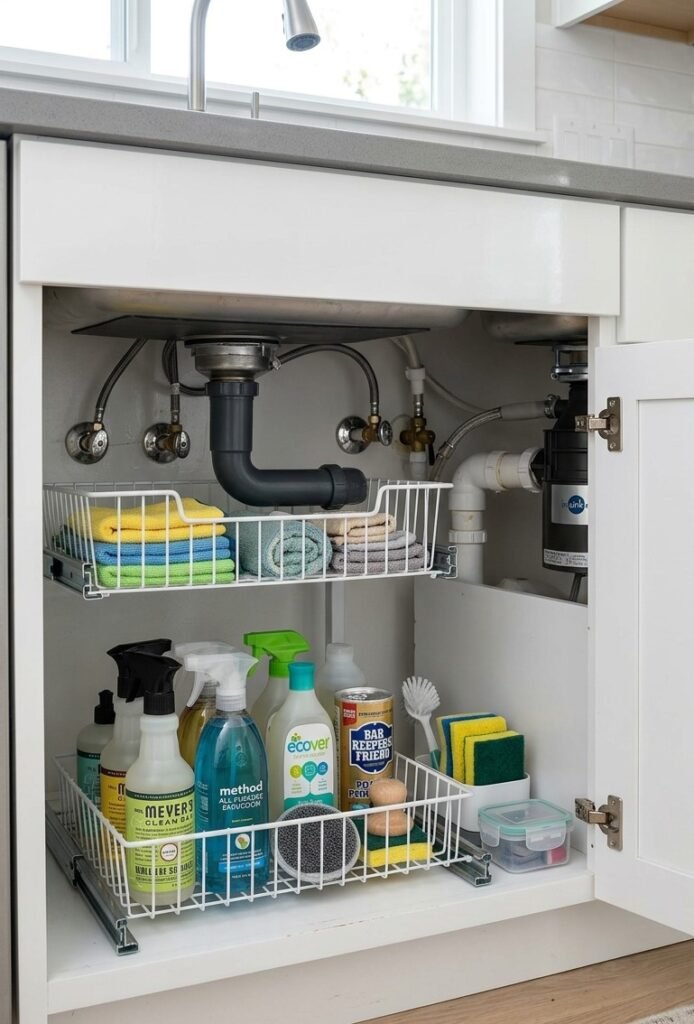
The cabinet under the kitchen sink is one of those spaces that easily turns into a messy collection of bottles, sponges, cleaning sprays, and random supplies.
Instead of putting everything directly on the cabinet floor, add small pull-out baskets, wire organizers, or stackable bins. Keep your most-used cleaning products toward the front so you don’t have to move everything just to find one bottle.
You can also dedicate one basket to microfiber cloths, sponges, and scrub brushes while keeping larger bottles together separately.
The goal isn’t to fill every inch. It is to make sure everything has a clear place.
2. Use a Two-Tier Organizer Inside a Bathroom Vanity
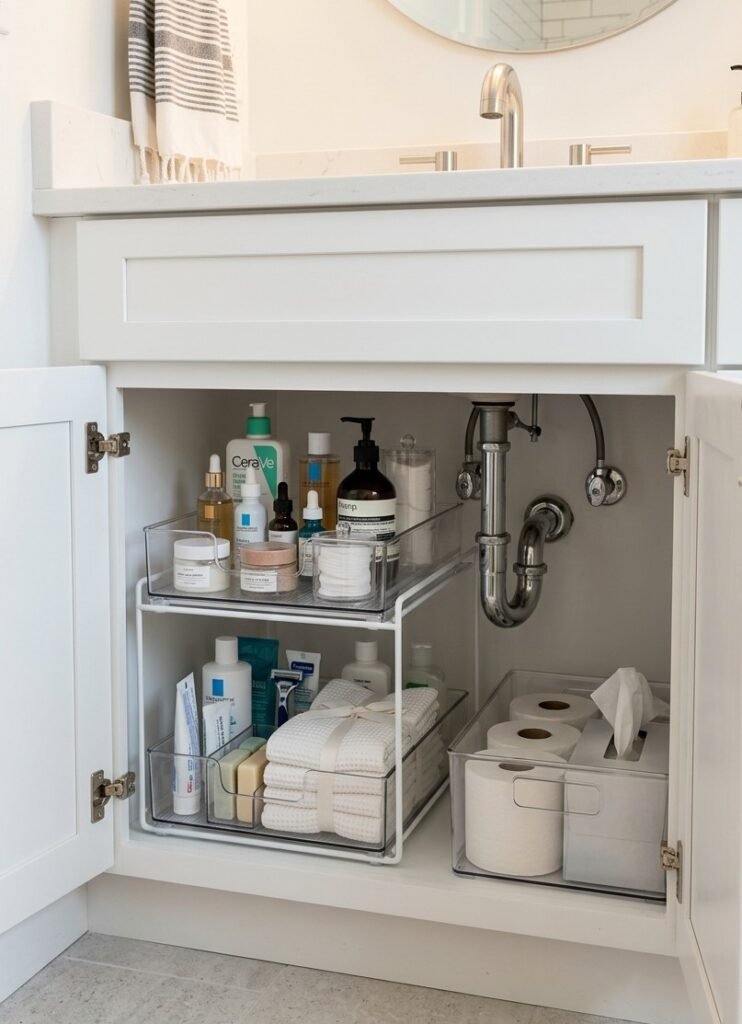
Deep bathroom cabinets often have a frustrating problem: there is plenty of space, but small bottles disappear toward the back.
A two-tier organizer solves this by creating an extra level. Put everyday skincare, soap, and toiletries on the upper level and keep backup products underneath. This works especially well for bathroom vanities because you can see more of your products without stacking bottles on top of each other. If you have several similar products, group them together instead of spreading them throughout the cabinet.
3. Make the Most of the Back of Cabinet Doors
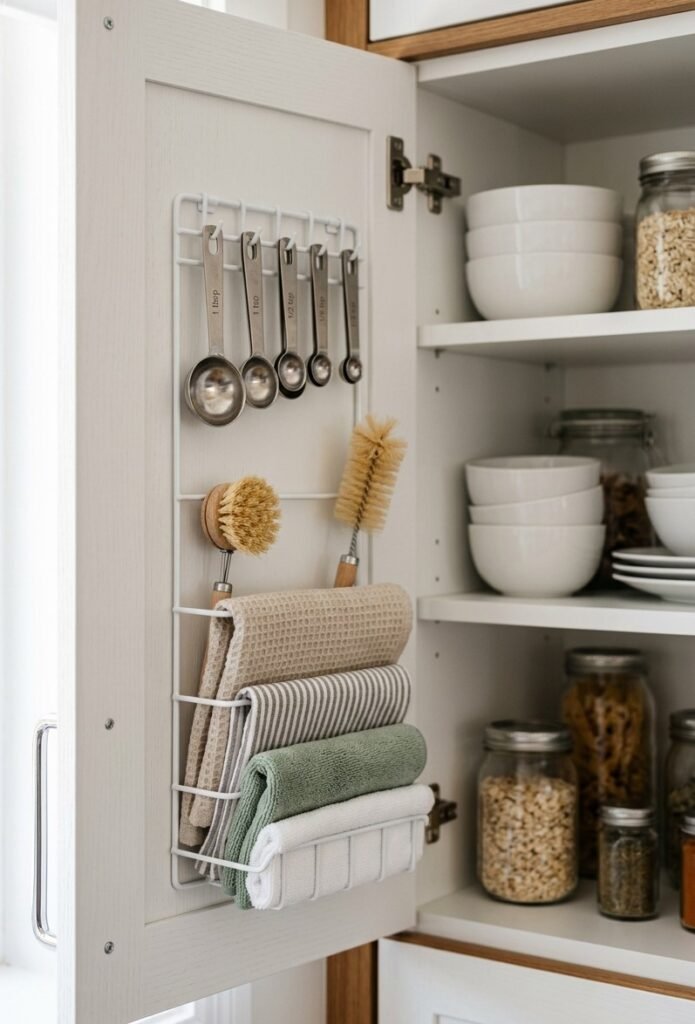
The inside of a cabinet door is an easy storage opportunity that many people completely ignore.
Slim racks, adhesive organizers, or small hooks can hold measuring spoons, brushes, cleaning cloths, kitchen tools, or lightweight accessories.
This is particularly useful in small kitchens where drawer and counter space is limited. Just make sure whatever you attach doesn’t prevent the cabinet door from closing properly.
4. Organize Shoes With a Slim Rack
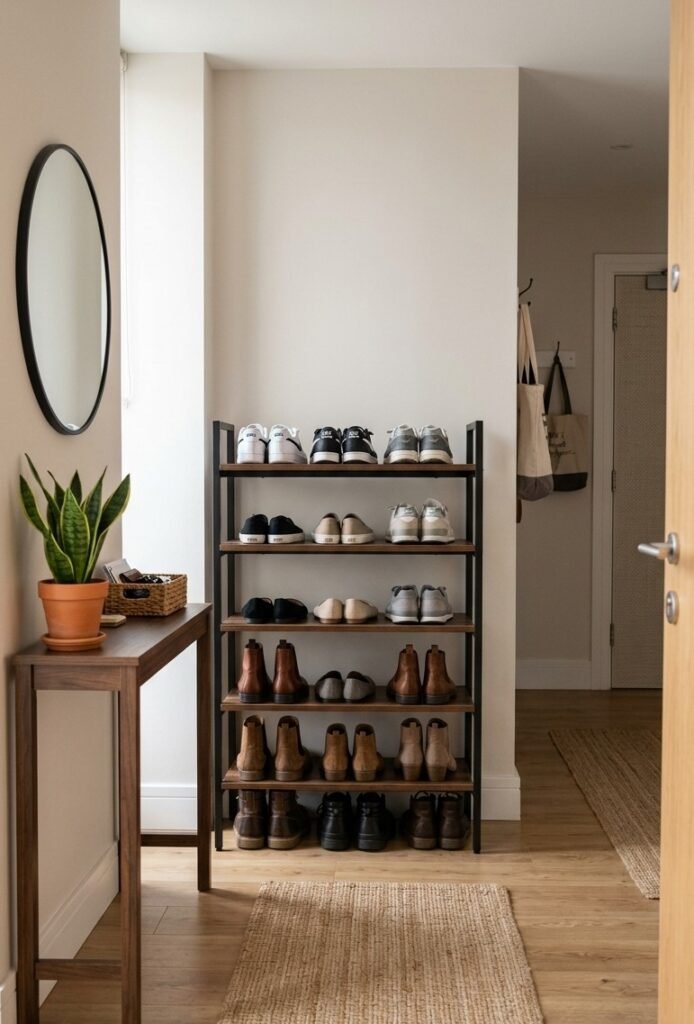
Shoes scattered around an entryway can make an otherwise tidy home look cluttered.
A slim multi-level shoe rack makes better use of vertical space while keeping the floor clear. Arrange everyday shoes on the easiest-to-reach levels and place less frequently worn pairs higher up.
If you have limited space, choose a narrow rack that fits against a wall rather than a large cabinet that takes up valuable floor area.
You can also keep seasonal shoes elsewhere and leave only frequently worn pairs near the entrance.
5. Give Your Bed a Hidden Storage Job
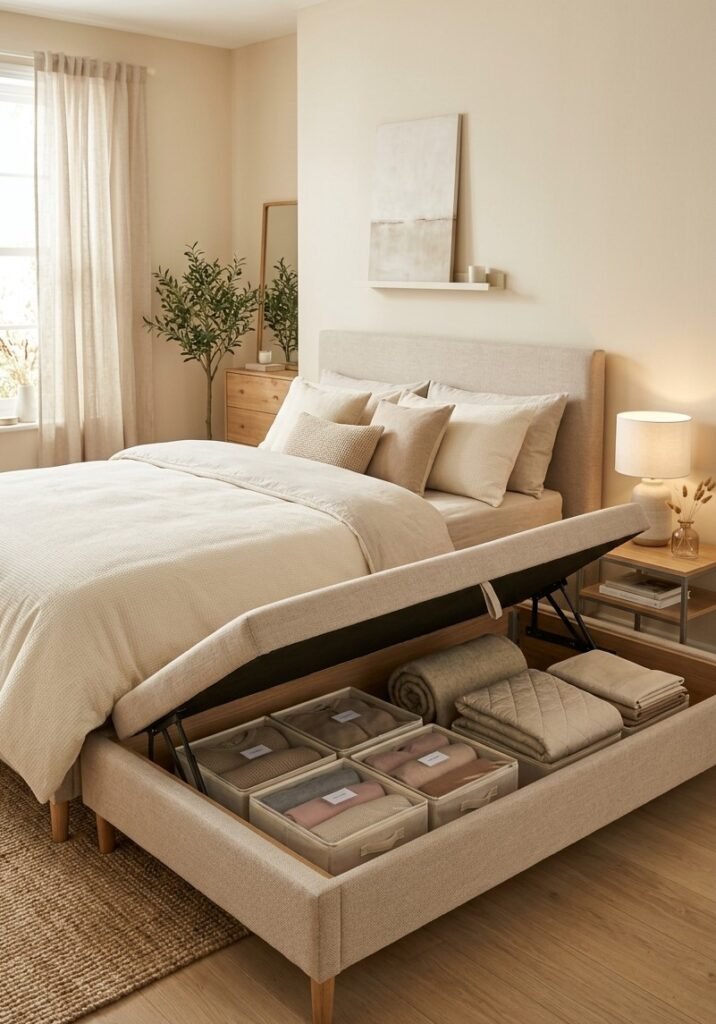
The space underneath your bed is valuable storage space, especially in a small bedroom.
Use low-profile storage boxes, fabric containers, or rolling drawers for things you don’t need every day. Seasonal clothes, spare blankets, extra bedding, bags, and occasionally used shoes are good candidates.
Avoid storing everyday essentials under the bed. If you need something every morning, having to pull out a heavy box will quickly become annoying.
6. Create a Small Bedroom Storage Wall
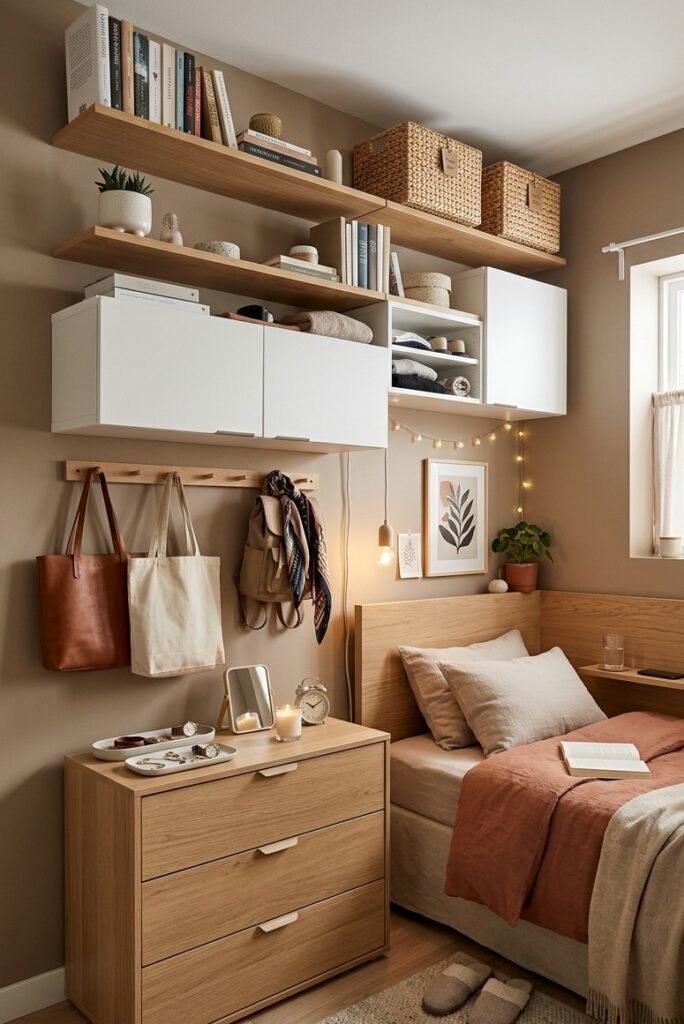
When floor space is limited, your walls can do some of the work.
A combination of floating shelves, narrow cabinets, hooks, and wall-mounted organizers can give you useful storage without taking up much floor space.
For example, shelves above a desk can hold books and baskets, while hooks can hold bags or headphones. A narrow cabinet can hide things you don’t want on display. This approach is particularly useful in small bedrooms where adding another large piece of furniture would make the room feel cramped.
7. Turn a Bathroom Shelf Into a Towel Station
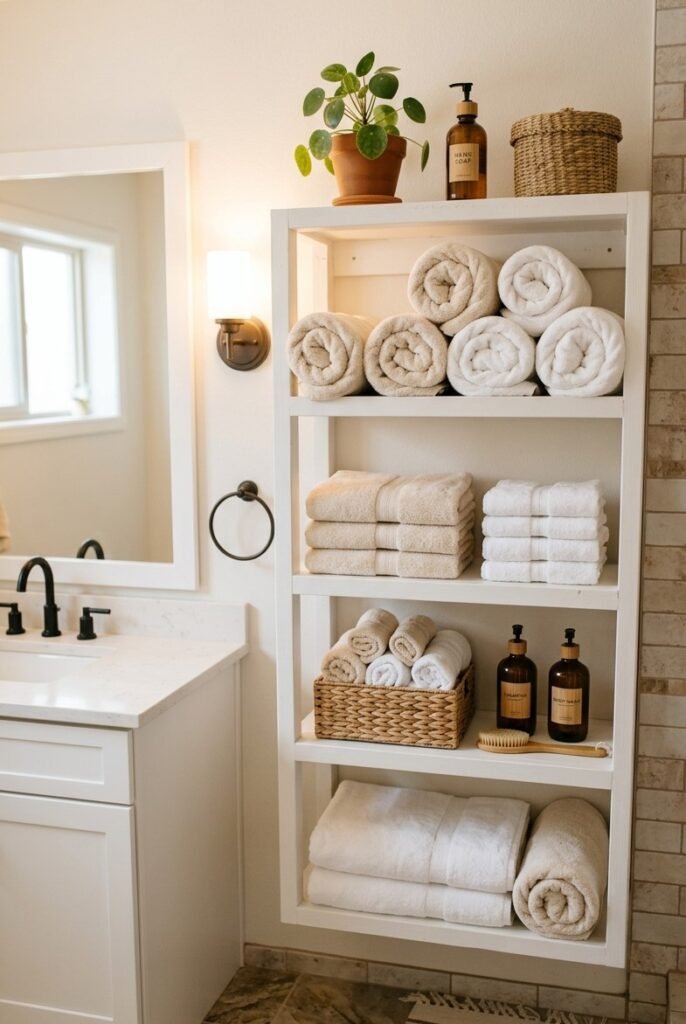
Instead of keeping towels in random cabinets or leaving them piled on a chair, create one dedicated towel area. Fold larger bath towels and roll smaller towels into baskets or open shelves. Keep hand towels and washcloths together so they’re easy to grab. A simple towel station can also make a small bathroom feel more intentional and organized without requiring a major renovation.
8. Use a Narrow Space Beside the Vanity
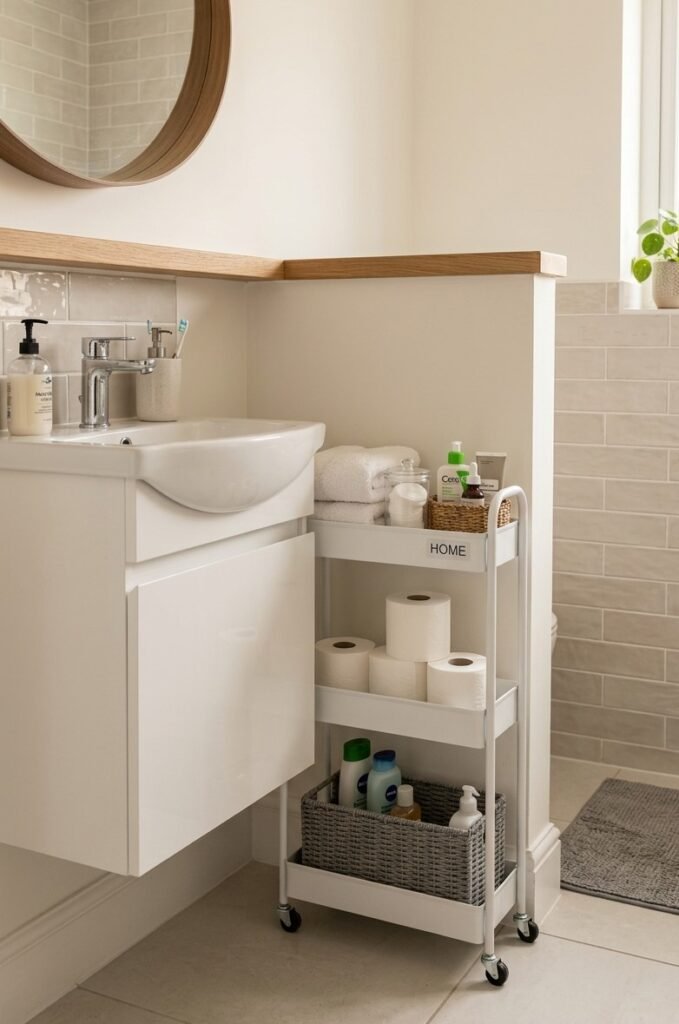
That awkward gap between a bathroom vanity and the wall doesn’t have to stay empty.
A slim rolling cart or narrow vertical shelf can fit into surprisingly small spaces. Use it for toiletries, folded towels, toilet paper, hair products, or cleaning supplies. A rolling cart is especially useful because you can pull it out when you need something and push it back when you’re finished. Before buying anything, measure the gap carefully. A storage solution that blocks a walkway isn’t really a solution.
9. Give Every Kitchen Utensil Its Own Place
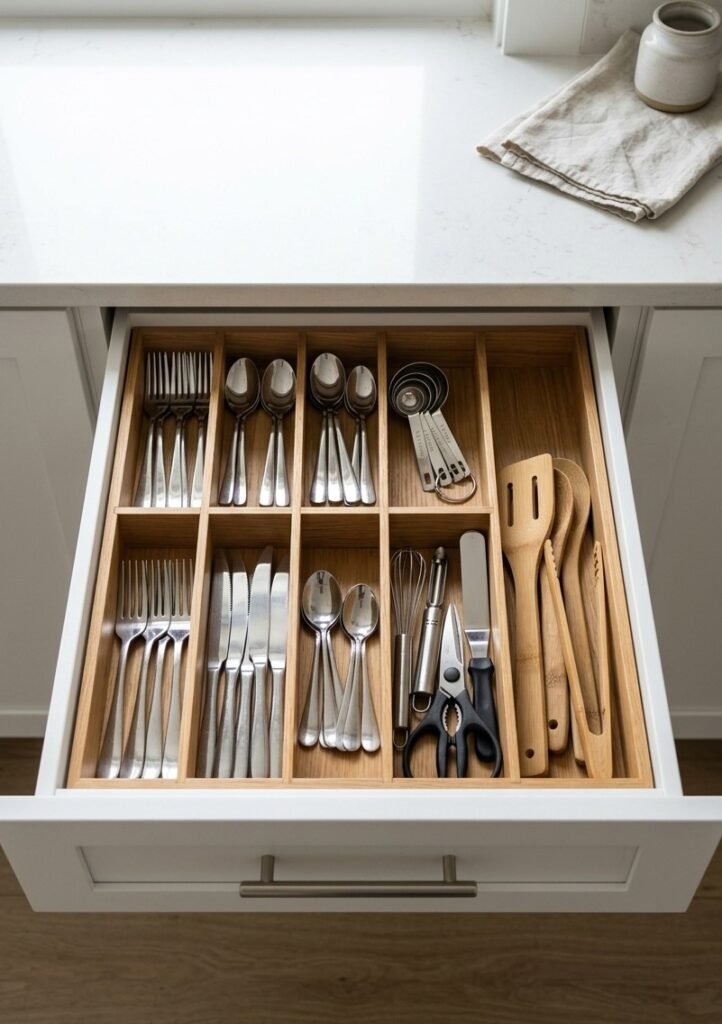
A messy utensil drawer wastes time because everything gets mixed together.
A simple divided cutlery tray can separate forks, knives, spoons, measuring spoons, wooden utensils, and other small kitchen tools. You don’t need a complicated organization system. The best setup is usually the one that makes it obvious where each item belongs. Try removing things you never use before organizing the drawer. There is little point in perfectly organizing utensils you don’t actually need.
10. Store Potatoes and Onions in Clear Containers
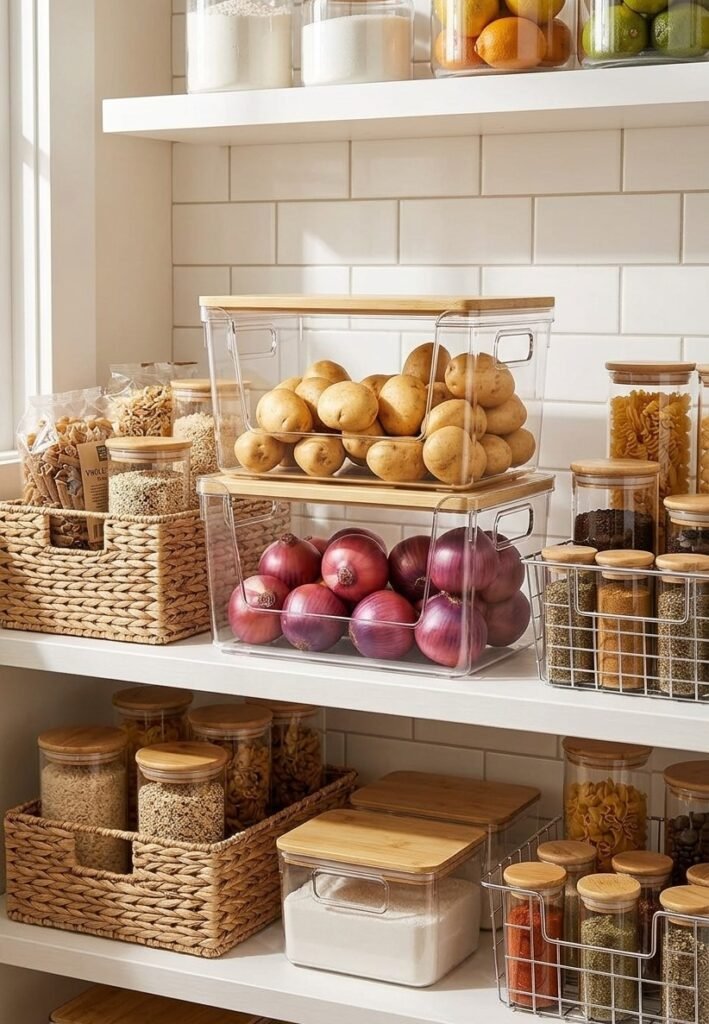
Kitchen organization isn’t only about dishes and utensils. Pantry ingredients need a proper home too.
Clear containers can help keep potatoes, onions, and other suitable pantry items together while making it easier to see what you have.
However, choose containers that are appropriate for the food you’re storing. Some produce needs ventilation and shouldn’t be sealed tightly. The bigger organization lesson is simple: visible storage can prevent forgotten food and unnecessary duplicates.
11. Create a Dedicated Book Corner
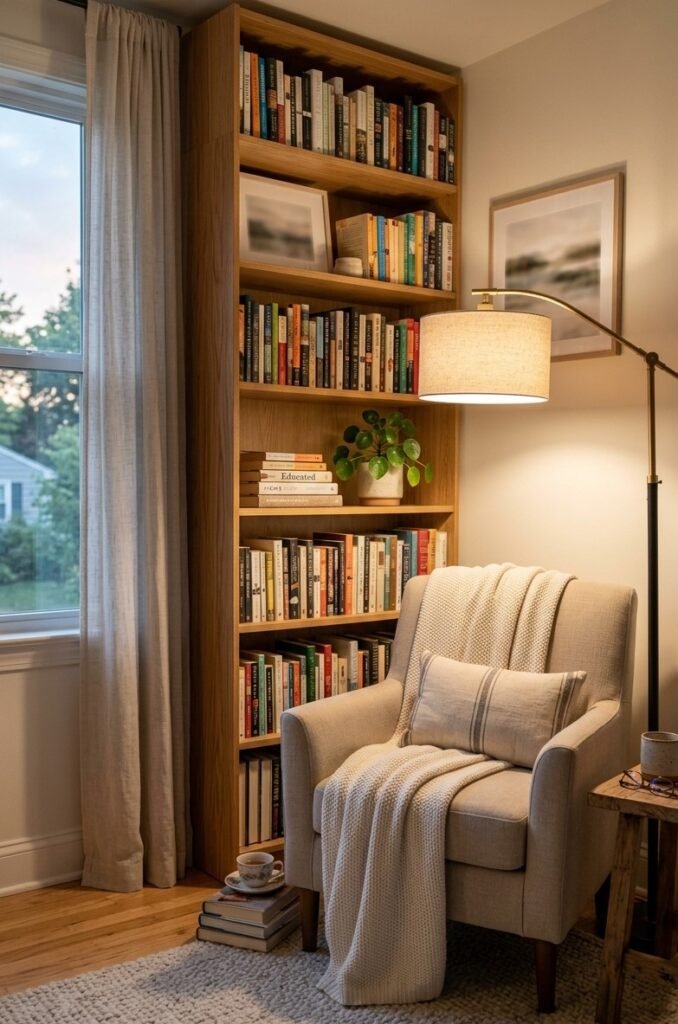
Books can make a room feel warm and personal, but piles of books on tables and floors can quickly turn into clutter.
A narrow bookshelf, floating shelves, or small bookcase can give your collection a dedicated home. You can organize books by subject, size, or simply by the ones you use most often. A few books placed horizontally can also add visual variety without making the shelf look chaotic. If you have a small room, a tall narrow bookshelf is often more practical than a wide one.
12. Use Baskets for the Items That Never Stay Organized
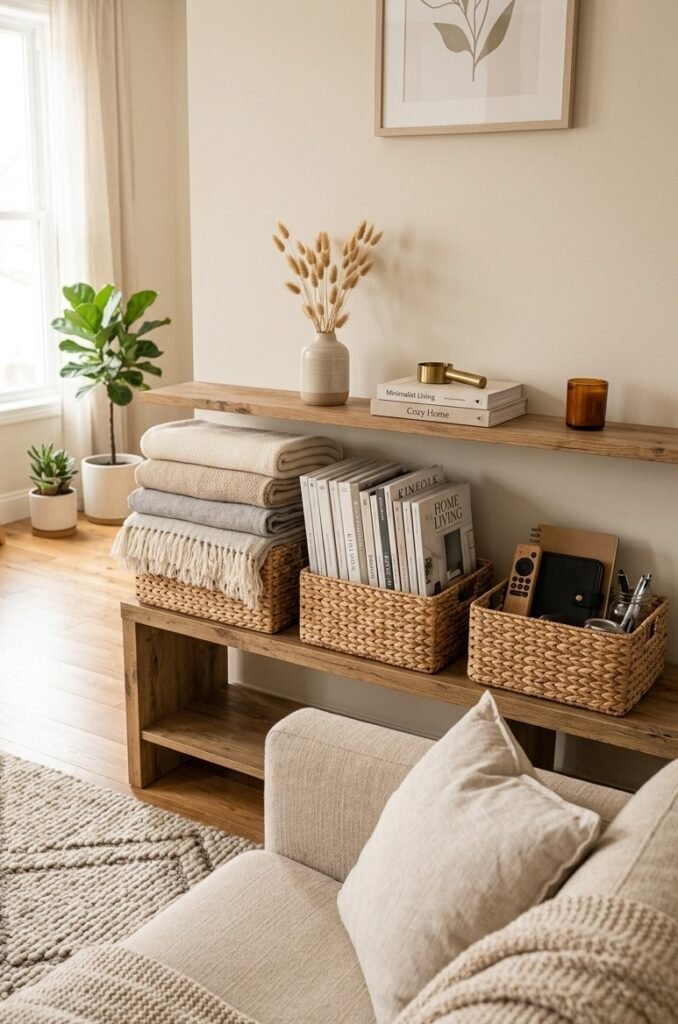
Some items don’t naturally stack or fit neatly into drawers. This is where baskets become useful.
Use separate baskets for extra blankets, accessories, toys, magazines, electronics, cleaning cloths, or miscellaneous household items.
The important part is giving every basket a purpose. A basket called “everything” will eventually become a pile of things you don’t know where to put. Choose a basket size that matches the category. A small basket works well for accessories, while bulky blankets need something larger.
13. Make Your Closet Easier to Use
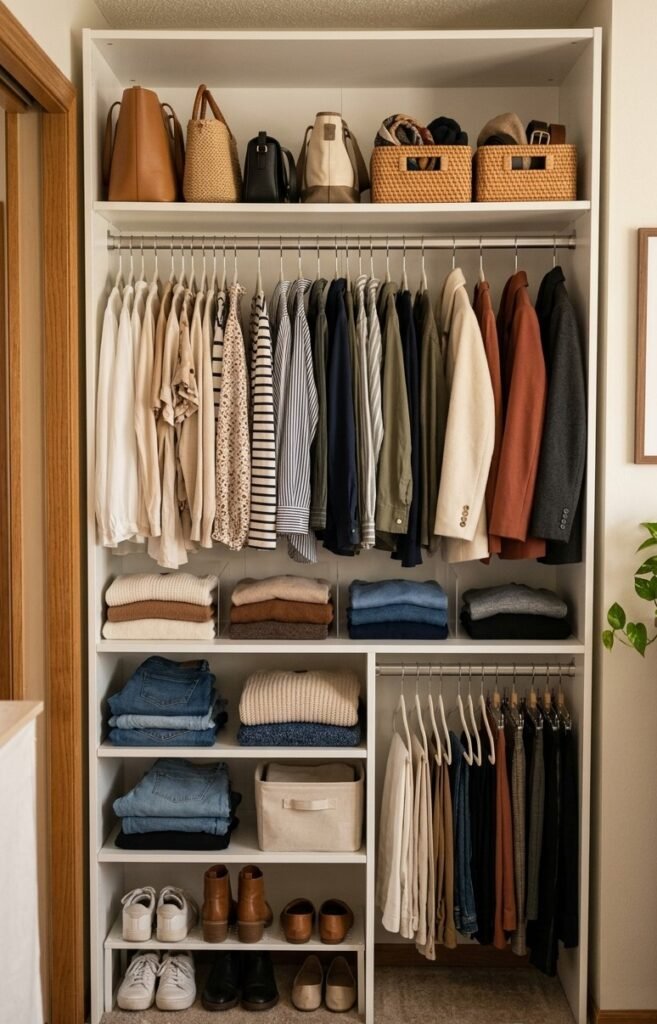
A closet doesn’t need to be huge to be functional.
Start by grouping similar clothing together. Keep shirts with shirts, trousers with trousers, jackets with jackets, and so on. Matching slim hangers can also make the closet easier to navigate and create more consistent spacing.
Use shelf dividers or small baskets for folded clothing and accessories. Keep the items you wear most frequently in the easiest-to-reach locations and don’t ignore clothes you never wear. Organization can’t solve the problem of having far more stuff than your closet can reasonably hold.
14. Turn the Side of a Desk Into Storage
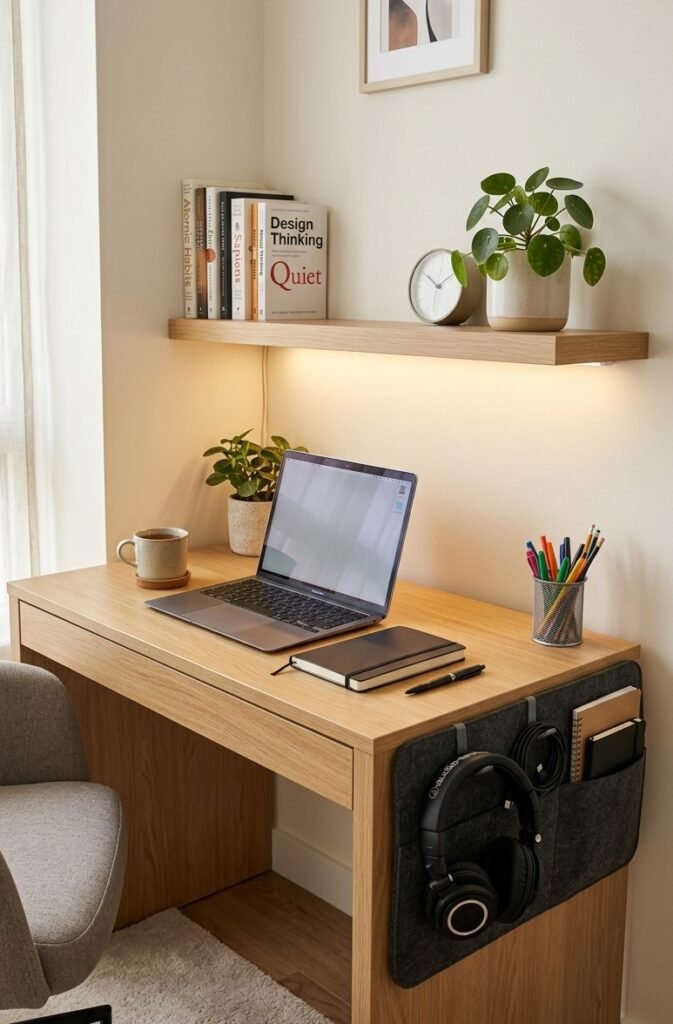
Your desk doesn’t have to hold everything.
The side of a desk can become useful storage for headphones, charging cables, notebooks, stationery, and small accessories. A small hanging organizer, adhesive hooks, or a slim side shelf can keep these items off the desktop. This is especially helpful if you use your desk for studying or working. A clear surface makes it easier to actually use the space for its main purpose.
15. Use a Drawer Organizer for Small Bedroom Items
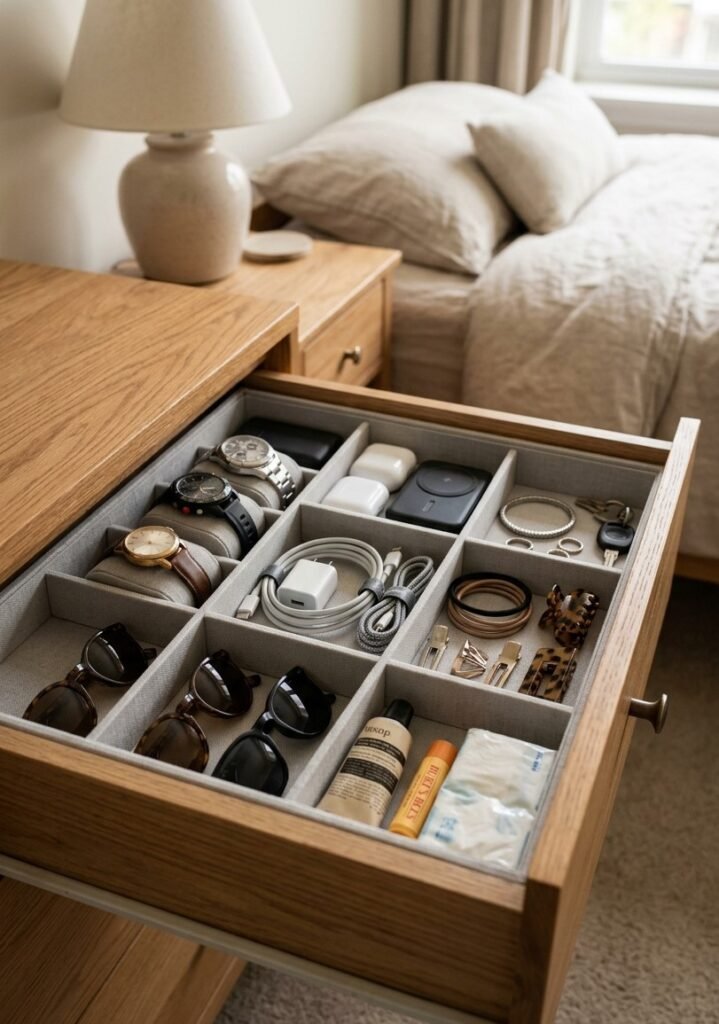
Small bedroom items are often what make drawers messy. Watches, accessories, charging cables, sunglasses, stationery, and other little things can quickly become one giant pile.
Use adjustable drawer dividers or small compartments to separate these items.
You don’t need a separate organizer for every object. Create practical categories based on how you actually use the items.
For example, one section can hold charging accessories, another can hold personal accessories, and another can hold small everyday items. The best organization system is one that you can maintain without thinking about it.
Final Thoughts: Organize the Space You Already Have
Good organization doesn’t mean buying dozens of containers or making your home look like a showroom.
Start by looking for unused space.
Under the bed.
Behind cabinet doors.
Beside the vanity.
Above shelves.
Inside deep drawers.
Along empty walls.
Under the kitchen sink.
These overlooked areas can provide a surprising amount of extra storage.
Most importantly, don’t organize things simply for the sake of making them look neat. A good organization system should make your daily life easier, faster, and less cluttered.
Start with one problem area, give everything a logical home, and then move to the next. That’s a much more realistic way to create an organized home that actually stays organized.
Categories: Home Decor

Leave a Reply