
Your cart is currently empty!
INTROCTION:
Creating a study space in a small bedroom can feel challenging. You want enough room for your laptop, books, stationery, and everyday essentials, but you also want the space to look stylish and inspiring.
The good news is that a small study corner doesn’t have to feel boring or cramped. With the right desk, comfortable chair, layered lighting, wall decor, storage, and a few personal touches, even a tiny corner can become a beautiful and functional workspace.
If you’re looking for Gen Z study setup ideas for a small room, these seven setups offer different color palettes and moods while keeping the space practical. From warm walnut and amber tones to soft lavender and forest green, each style can be adapted to your own room and personality.
1. Warm Walnut + Amber Pinterest Desk
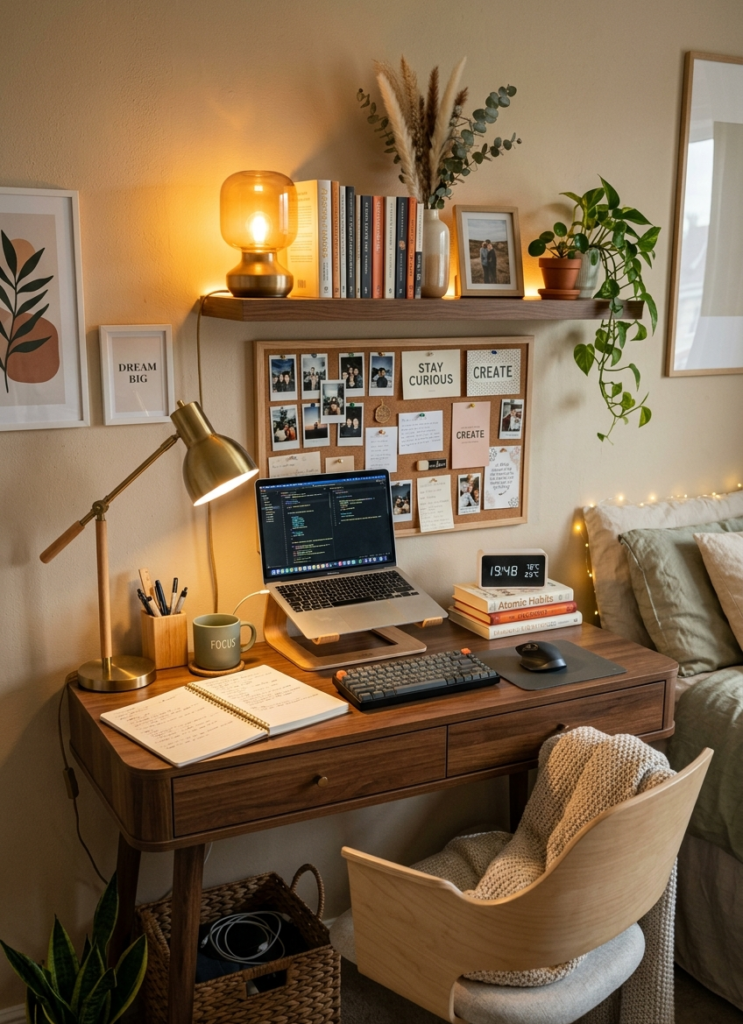
If you love the warm, cozy look of Pinterest study rooms, a walnut and amber setup is an excellent choice.
Start with a compact walnut desk with rounded edges and a few drawers for hidden storage. Pair it with a cream or light-gray ergonomic chair to create a soft contrast against the darker wood.
The desk should have everything you actually need for studying without becoming overcrowded. A laptop stand, keyboard, mouse, notebook, pen holder, headphones, books, a small clock, and a ceramic mug are enough to make the setup feel complete and lived-in.
Make the Wall Part of the Setup
Don’t leave the wall above your desk empty. Add a floating wooden shelf with books, small plants, framed photographs, and a warm decorative lamp.
You can also add a corkboard underneath the shelf for polaroids, study reminders, quotes, and small notes. This gives the workspace a personal feel while making the wall useful.
For lighting, use a warm desk lamp combined with a subtle amber LED strip behind the shelf. The combination creates that soft evening glow often seen in cozy Pinterest interiors.
Best Color Palette
- Warm walnut
- Cream
- Beige
- Muted sage
- Amber
This combination works particularly well if you want your study area to feel warm, calm, mature, and cozy.
2. Sage Green Creative Study Station
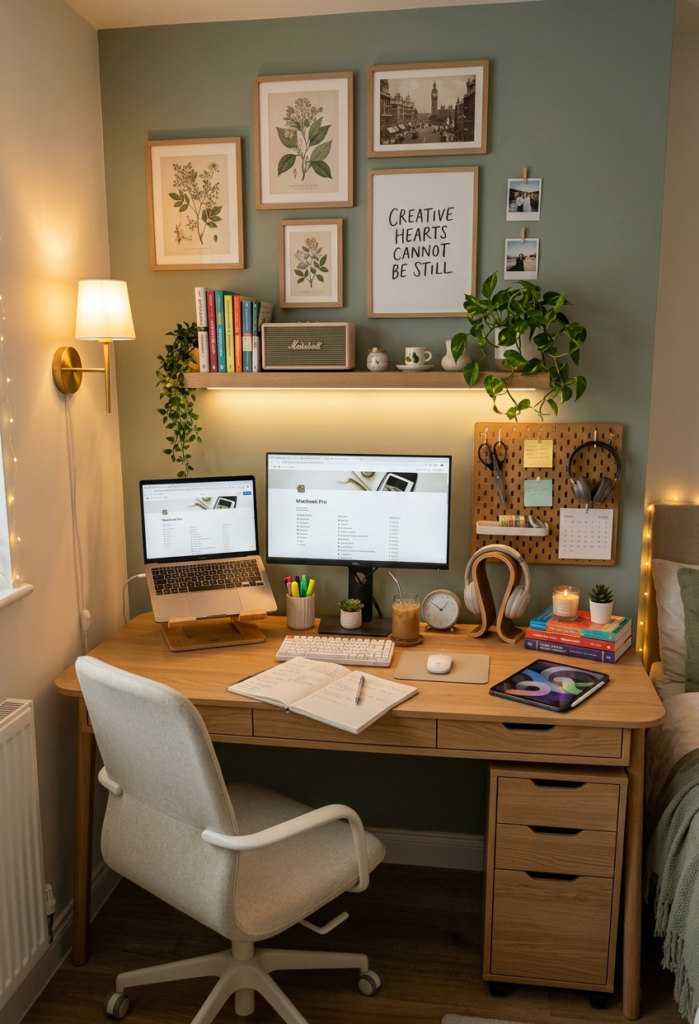
For something fresher and more natural, try a sage green and light-oak study setup.
Sage green is an excellent color for a study space because it adds personality without being overwhelming. Use a muted sage wall as the main backdrop and combine it with a pale-oak desk and cream ergonomic chair.
Keep the desk functional with a laptop, monitor, keyboard, tablet, notebook, stationery organizer, headphones, books, and a small plant.
The key is to organize everything into specific zones. Keep your computer setup toward the center, stationery on one side, and notebooks or books on the other.
Create a Gallery Wall
This setup becomes much more interesting when you use the wall creatively.
Try combining:
- Botanical prints
- Small photographs
- Typography artwork
- Polaroids
- A small calendar
- A floating shelf
- A pegboard
A pegboard is especially useful in a small room because it gives you vertical storage without taking up valuable desk space.
Add warm lighting underneath the shelf and a small brass or cream wall lamp. The warm light will balance the cooler green tones beautifully.
Why It Works
The combination of sage green, pale wood, cream, and warm lighting creates a relaxed environment that feels both productive and aesthetically pleasing.
It’s a great option if you want a study corner that feels creative rather than overly minimal.
3. Terracotta Sunset Study Room
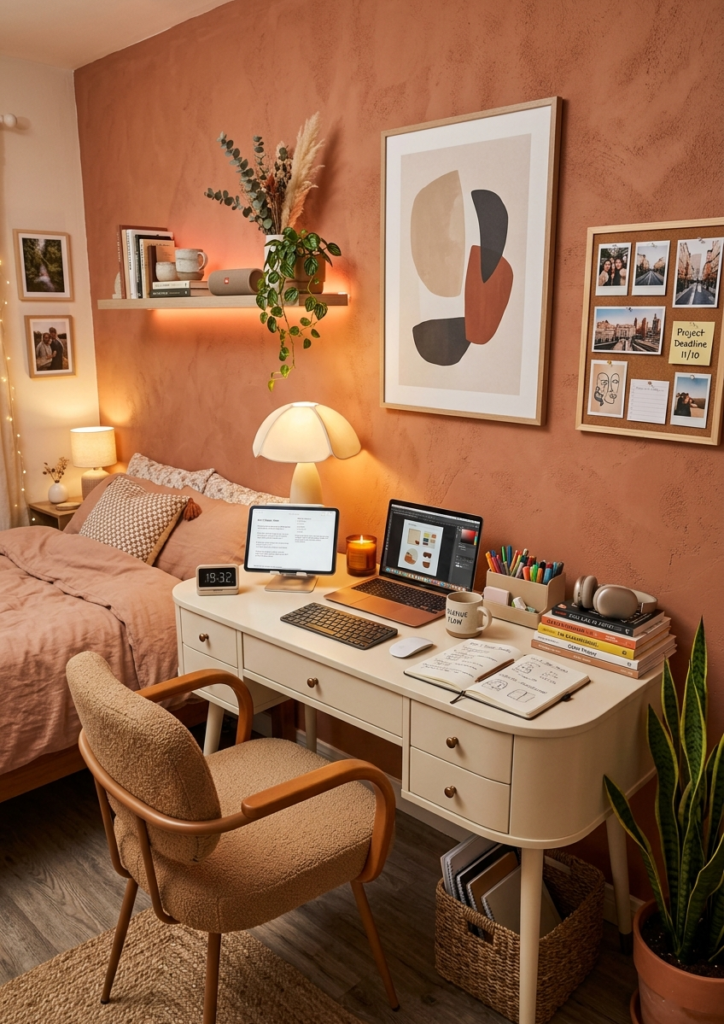
Want your study area to feel warm and artistic? A terracotta and cream setup can completely transform a small corner.
Start with a cream-colored desk featuring rounded edges and built-in drawers. Pair it with a tan or boucle chair to keep the furniture soft and inviting.
Instead of filling the desk with decorative objects, focus on a few useful accessories: your laptop, notebook, stationery organizer, coffee cup, candle, books, and a small plant.
The wall is where this setup really comes alive.
Build a Layered Wall
Use a large abstract artwork as the main focal point, then surround it with smaller photographs, polaroids, handwritten notes, and a floating shelf.
The shelf can hold books, handmade ceramics, dried flowers, a small speaker, and a trailing plant.
For an extra cozy effect, install a subtle peach or warm-orange LED strip behind the shelf. When combined with a warm desk lamp, it creates a soft sunset-like glow.
Add Soft Textures
Small spaces can sometimes feel flat when everything has the same texture. Add a woven basket, textured rug, ceramic objects, linen accessories, or a soft chair to create visual depth.
The result is a study corner that feels warm, creative, personal, and comfortable.
4. Cream + Cherry Red Editorial Study Corner
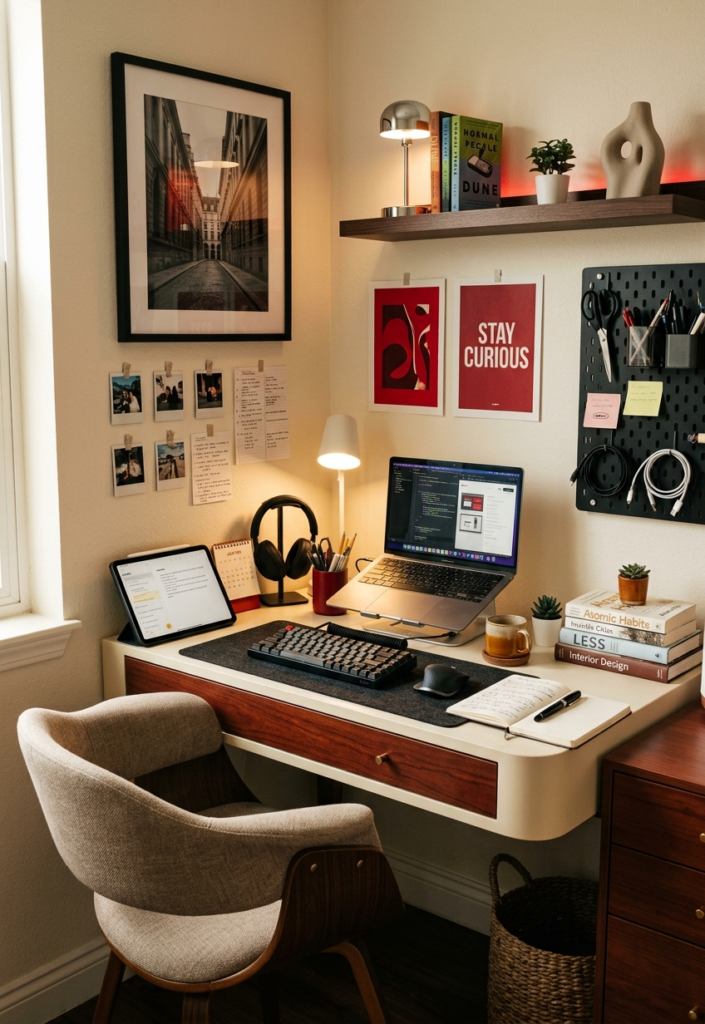
If you want something more bold without using bright neon colors, try cream and cherry red.
The foundation should remain neutral. Choose a warm cream desk, beige ergonomic chair, and ivory wall. Then introduce cherry red through smaller accessories and artwork.
For example, you could use a red stationery holder, book covers, small art prints, or a desk accessory.
Create a Statement Wall
Place a large black-and-white photograph above the desk and surround it with smaller red graphic prints, polaroids, handwritten notes, and a floating shelf.
A black pegboard can be added to one side for headphones, charging cables, scissors, sticky notes, and stationery.
This keeps the setup visually interesting while also providing practical storage.
Use Lighting Carefully
Instead of covering the room in red LEDs, keep the lighting subtle.
A warm desk lamp should provide the main working light, while a very soft red glow behind the shelf can add atmosphere.
This creates a more sophisticated editorial look rather than making the room feel like a gaming setup.
The overall combination of cream, cherry red, black, beige, and warm wood gives the workspace a fashionable and youthful personality.
5. Lavender + Warm White Study Haven
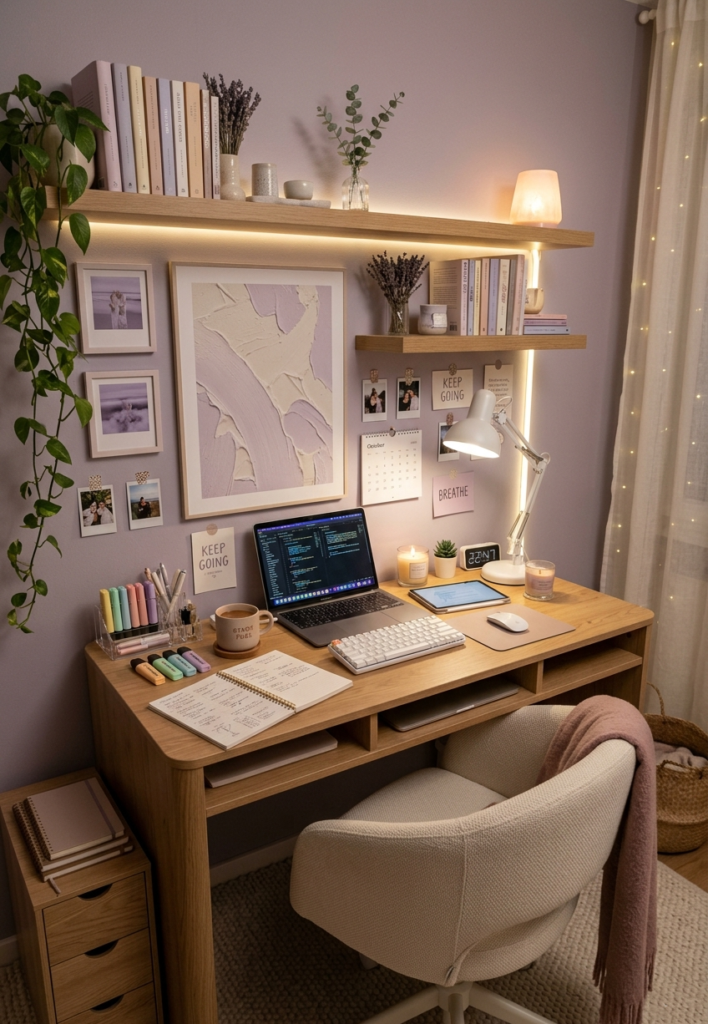
For a softer and dreamier setup, consider lavender, cream, and natural wood.
A pale-oak desk works beautifully against a muted lavender wall. Pair it with a rounded cream chair and add small lavender accents throughout the space rather than making everything purple.
Your desk can include a laptop, tablet, keyboard, notebook, pastel highlighters, stationery organizer, candle, headphones, books, and a small plant.
Decorate Vertically
When floor space is limited, your walls become your best friend.
Use two floating shelves to display books, small ceramics, dried flowers, plants, and a translucent lamp. Add a larger artwork underneath or between the shelves.
A small pinboard can also hold photographs, study reminders, and motivational cards.
This makes the wall feel full and interesting without making the actual desk crowded.
Create a Soft Glow
Use warm-white lighting behind the shelves and a subtle lavender light underneath the desk.
Keep the lighting soft rather than intensely purple. The goal is to create a dreamy evening atmosphere while still maintaining a comfortable environment for studying.
6. Forest Green Botanical Study Setup
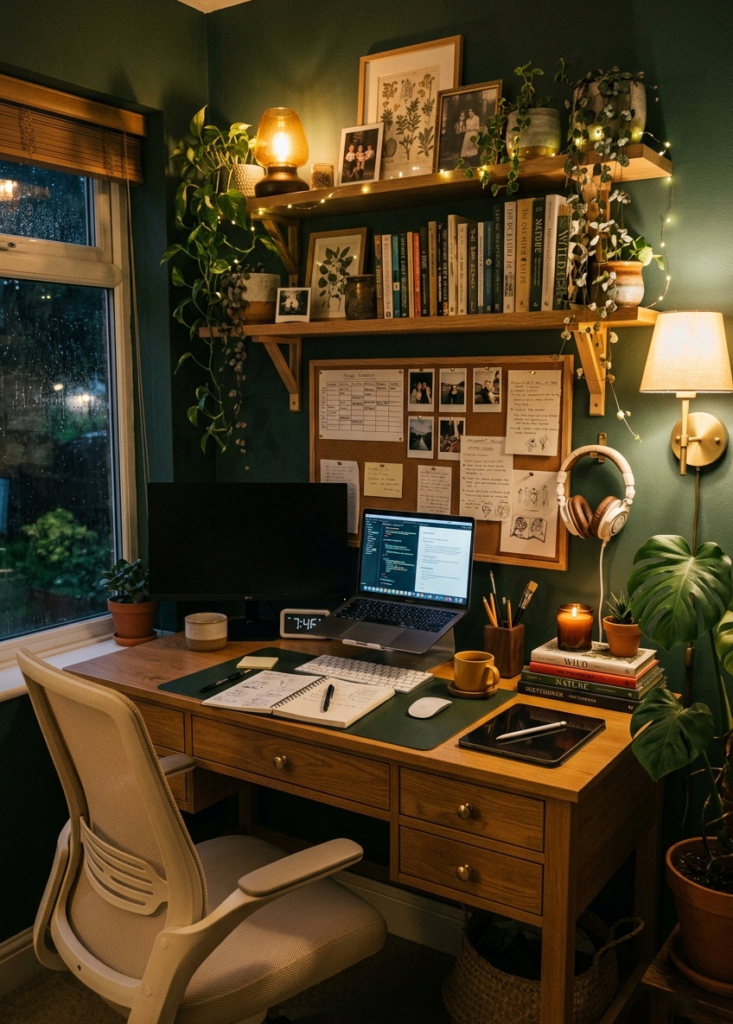
If plants are your favorite part of an aesthetic room, a forest green botanical study setup is worth trying.
Use a warm-oak desk against a deep forest-green wall and pair it with a cream ergonomic chair. The darker wall immediately creates a moodier atmosphere while the light furniture keeps the corner from feeling too heavy.
Complete the desk with a laptop, monitor, keyboard, notebook, stationery, headphones, coffee cup, books, candle, and a few small plants.
Turn the Wall Into a Mini Library
Install a long wooden floating shelf above the desk and fill it with books, framed botanical prints, photographs, ceramics, and trailing plants.
Underneath, add a corkboard with study schedules, photographs, handwritten notes, and sketches.
You can also place a warm brass lamp on one side of the desk. Hidden amber LEDs behind the shelf will illuminate the plants and books beautifully in the evening.
Don’t Forget Floor-Level Decor
A small study corner doesn’t have to stop at the desk.
Place a narrow plant beside the desk and a woven basket underneath for notebooks, cables, or extra supplies. These small additions make the entire corner feel more complete.
The combination of forest green, oak, cream, brass, and amber creates a cozy botanical atmosphere that’s perfect for late-night studying.
7. Soft Blue + Warm Orange Night Setup
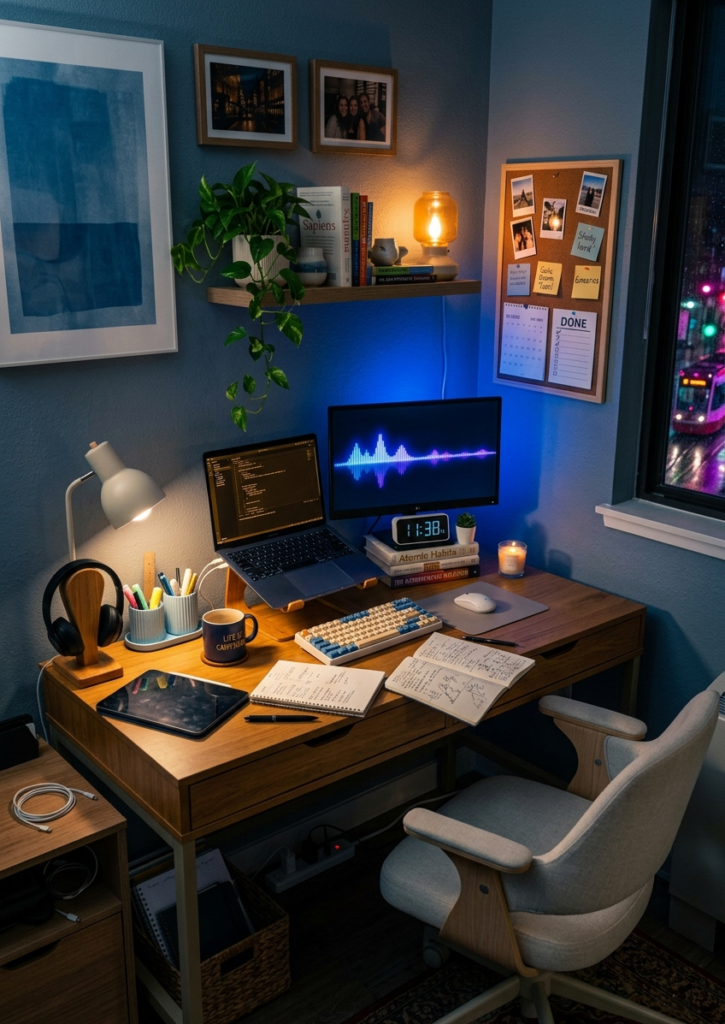
For a more contemporary look, combine dusty blue with warm orange lighting.
Use a light-beige desk against a muted blue-gray wall and pair it with a cream ergonomic chair. Keep the furniture neutral so the lighting and wall decor become the main visual elements.
A complete desk setup can include a laptop, external monitor, keyboard, mouse, tablet, notebook, stationery, headphones, candle, clock, plant, mug, and a few books.
Create a Balanced Gallery Wall
Above the desk, use one larger blue-toned artwork as the focal point. Add smaller photographs, a floating shelf, a mini corkboard, a calendar, and a few personal notes around it.
The goal isn’t to make every item match perfectly. Slight differences in size and placement make the wall feel more natural and personal.
Mix Cool and Warm Lighting
This is where the setup gets its personality.
Use a subtle blue LED glow behind the shelf, then add a warm amber lamp on the desk or shelf. The contrast between cool blue and warm orange creates a beautiful nighttime atmosphere.
Keep the blue light low and indirect. It should enhance the room rather than dominate it.
This setup works especially well if you like modern, cozy, slightly moody interiors without wanting an overly dark aesthetic.
How to Make a Small Study Setup Look Complete
The biggest mistake when designing a small study corner is thinking that you need to remove everything to make the space look aesthetic.
In reality, the best setups usually have layers.
Start With the Right Desk
Choose a desk that gives you enough working space without overwhelming the room. Rounded edges, built-in drawers, or a narrow profile can help make a small room feel more spacious.
Choose a Comfortable Chair
Don’t sacrifice comfort for aesthetics. An ergonomic chair with a stylish silhouette can give you both.
Look for neutral upholstery, curved shapes, light wood, or subtle color accents that complement your room.
Use the Wall for Storage and Personality
Floating shelves, pegboards, corkboards, and gallery walls are perfect for small rooms.
They allow you to display books, artwork, plants, photographs, and stationery without using up your limited floor space.
Layer Your Lighting
Good lighting can completely change the mood of a study corner.
A simple formula is:
Desk lamp + warm ambient light + subtle LED lighting
Your desk lamp provides practical lighting, while LEDs and decorative lamps create atmosphere.
Add Personal Details
This is what separates a generic desk from a personal study space.
Add things you genuinely like:
- Polaroids
- Posters
- Books
- Plants
- Candles
- Small ceramics
- Handwritten notes
- Desk clocks
- Headphones
- Coffee mugs
- Study planners
You don’t need dozens of accessories. A carefully selected collection will look much better than random clutter.
Final Thoughts
A small room doesn’t mean you have to compromise on style.
The best Gen Z study setups combine functionality with personality. A good desk, comfortable chair, organized technology, practical storage, layered lighting, wall art, plants, and a few personal accessories can turn even an unused bedroom corner into a space you’ll actually want to spend time in.
Whether you prefer warm walnut and amber, fresh sage green, artistic terracotta, bold cherry red, dreamy lavender, botanical forest green, or soft blue and orange, the important thing is to build the setup around your own mood and routine.
Start with the essentials, use your walls intelligently, keep the lighting warm and layered, and then add the details that make the space feel like you.
Aesthetic doesn’t have to mean excessive. The goal is a study corner that looks beautiful, feels comfortable, and makes sitting down to study just a little more enjoyable.
Categories: Home Decor
Leave a Reply