
Your cart is currently empty!

Introduction
Have you ever sat down to study, only to spend the first 20 minutes looking for your notes, moving things around or trying to make your desk comfortable?
Sometimes, it’s not that you don’t want to study. Your study space simply isn’t helping you.
A cluttered desk, poor lighting, uncomfortable chair or too many distractions can make even a simple study session feel difficult.
The good news is that you don’t need a big room or an expensive desk to create a beautiful study corner.
With a few thoughtful changes, you can turn even a small bedroom corner into a cozy, organized and inspiring place to study.
Here are 15 simple ways to create a study corner that looks Pinterest-worthy while helping you stay comfortable and focused.
Before You Start: What Does a Good Study Corner Need?
Before decorating, think about the things you actually need during your study sessions.
A good study corner should have three things: comfort, organization and a calm atmosphere.
| Essential | Why It Matters |
|---|---|
| Comfortable desk and chair | Helps you maintain a comfortable study position |
| Proper lighting | Makes reading and writing easier |
| Book and stationery storage | Keeps important supplies within reach |
| Organized desk | Reduces unnecessary distractions |
| Personal decor | Makes your space feel welcoming |
| Cable management | Keeps the setup neat and tidy |
You don’t need to buy everything at once. Start with the essentials and add decorative details gradually.
15 Steps to Create an Aesthetic Study Corner That Helps You Focus
1. Choose a Quiet Corner With Enough Natural Light
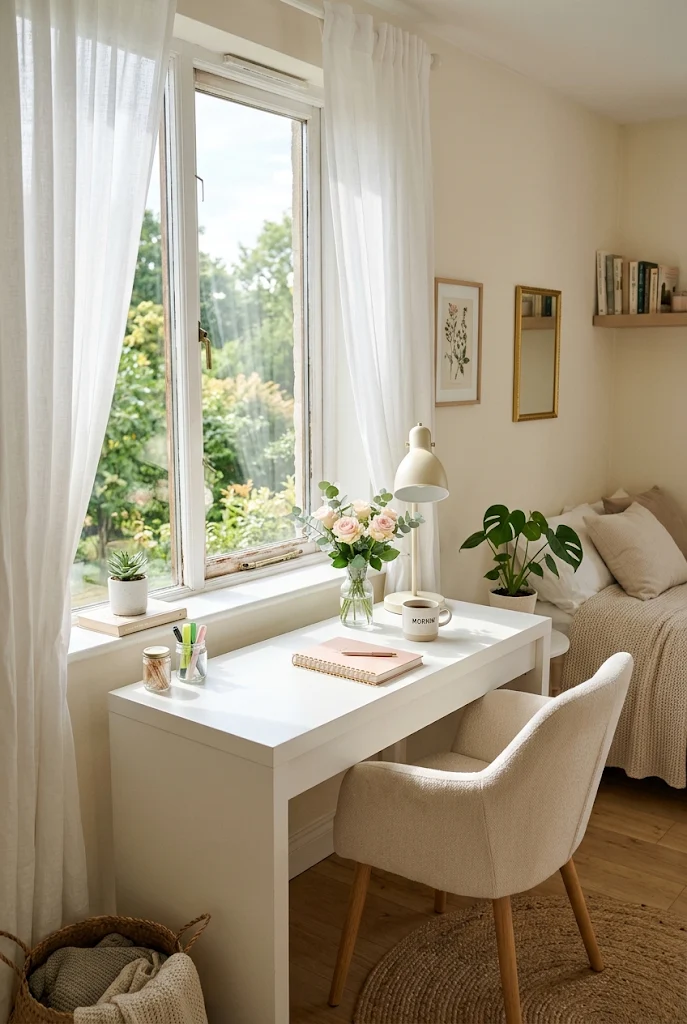
Start by choosing the right spot for your study area.
You don’t need an entire room. An unused bedroom corner, a space beside a window or even a small wall section can work beautifully.
If possible, place your desk near a window so you can enjoy natural daylight while studying.
Try to avoid placing your desk directly in front of distracting areas like a television or busy doorway.
How to recreate it:
- Choose a quiet corner with enough space for your desk.
- Place it near a window if available.
- Keep enough walking space around your setup.
- Avoid areas where people constantly walk past.
2. Pick a Desk That Fits Your Space
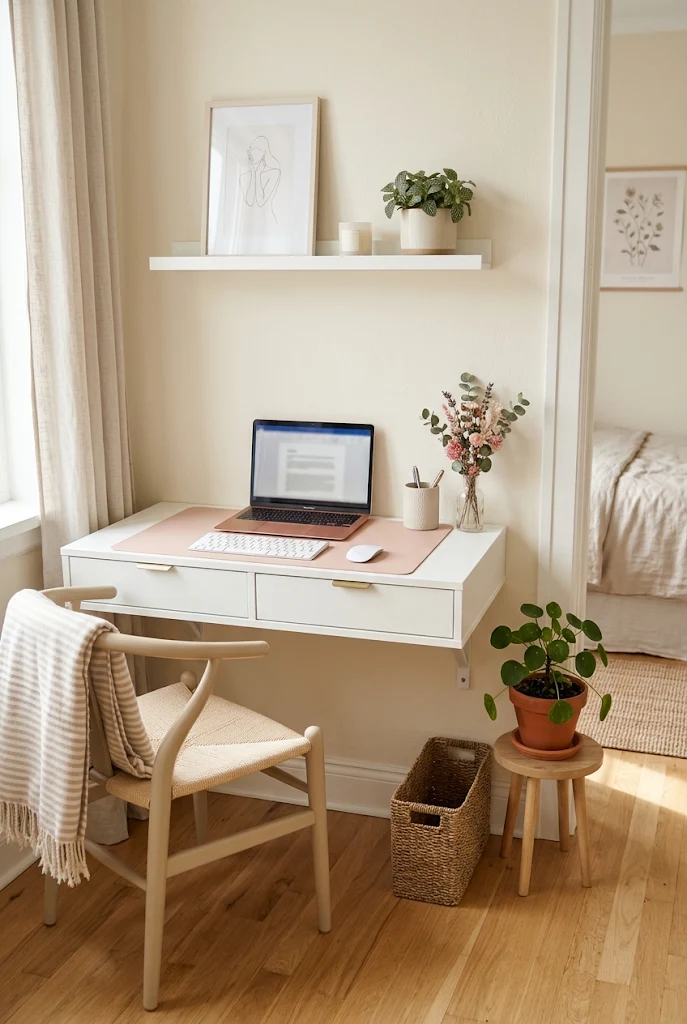
Your desk is the foundation of your study corner.
A desk that’s too large can make a small bedroom feel crowded, while a tiny surface may not provide enough room for your books and laptop.
Choose a simple desk that fits your room and daily study needs.
A light wooden desk, white writing desk or minimal desk with drawers can create a clean and timeless look.
How to recreate it:
- Use a compact writing desk for small bedrooms.
- Choose a desk with drawers if you need hidden storage.
- Look for a clean design without unnecessary details.
- Leave enough surface space for your everyday study essentials.
3. Choose a Comfortable Chair
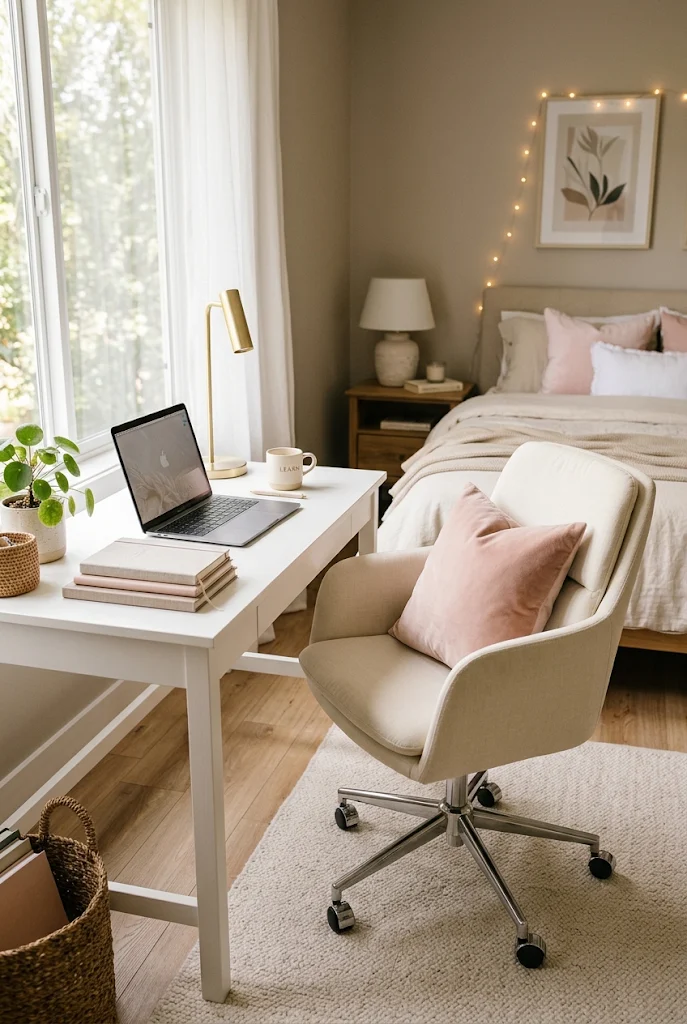
A beautiful desk setup won’t help much if your chair is uncomfortable.
Choose a chair that supports your back and allows your feet to rest comfortably on the floor.
An adjustable chair is useful because you can match its height to your desk.
For a softer aesthetic, you can choose a simple upholstered chair, but make sure comfort comes before appearance.
How to recreate it:
- Choose a chair with back support.
- Check that your elbows can rest comfortably near desk height.
- Use a footrest if your feet don’t reach the floor.
- Add a small cushion only if it doesn’t affect your posture.
4. Create a Soft and Beautiful Color Palette

Your study corner doesn’t need too many colors to look attractive.
Choose two or three shades that work well together. This makes the entire setup feel more coordinated.
For example, cream with light wood creates a warm and peaceful look, while sage green and white give your corner a fresh appearance.
If you prefer a feminine aesthetic, try blush pink with ivory and soft beige.
Color combinations to try:
| Style | Color combination |
|---|---|
| Minimal aesthetic | White + beige + light wood |
| Cozy study corner | Cream + warm brown + sage |
| Feminine setup | Blush pink + ivory + beige |
| Modern look | Grey + white + black |
| Natural aesthetic | Olive green + wood + cream |
Choose colors that make your room feel comfortable rather than visually overwhelming.
5. Add a Desk Lamp for Comfortable Evening Study Sessions
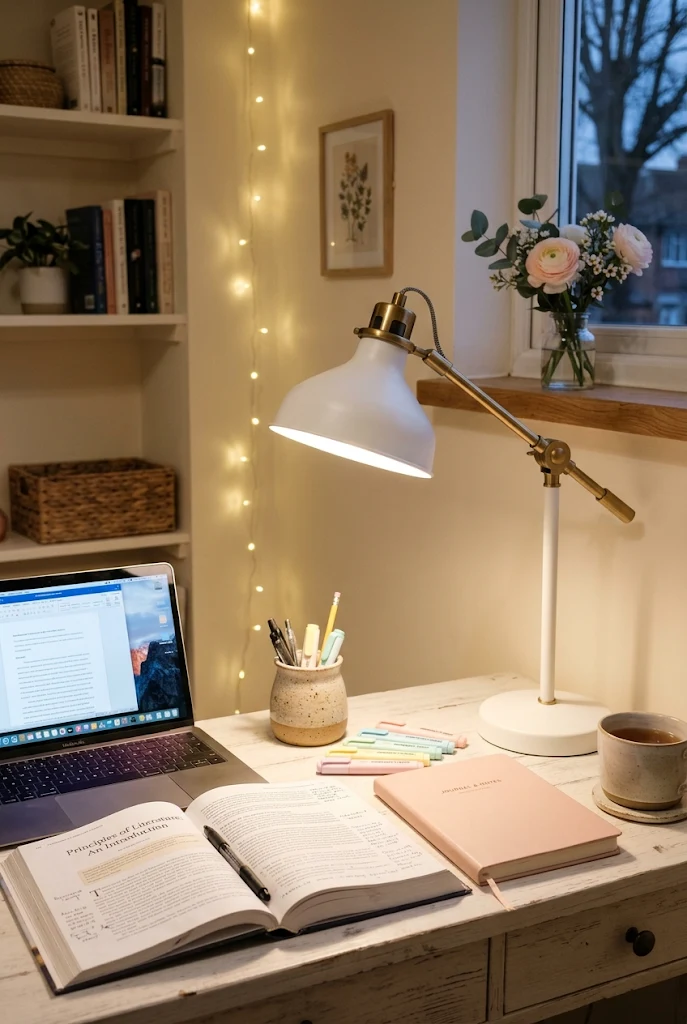
Lighting can completely change how your study corner looks and feels.
If your room has poor lighting, studying in the evening can become uncomfortable.
Add an adjustable desk lamp that directs light onto your books and workspace.
A warm, soft lamp can make your corner feel cozy, while a suitable task-light setting helps you see your notes clearly.
How to recreate it:
- Place your lamp on the opposite side of your writing hand when possible.
- Choose an adjustable lamp.
- Avoid strong glare on your laptop screen.
- Use a suitable neutral or warm-white task light.
6. Use a Desk Organizer to Stop Small Items From Taking Over
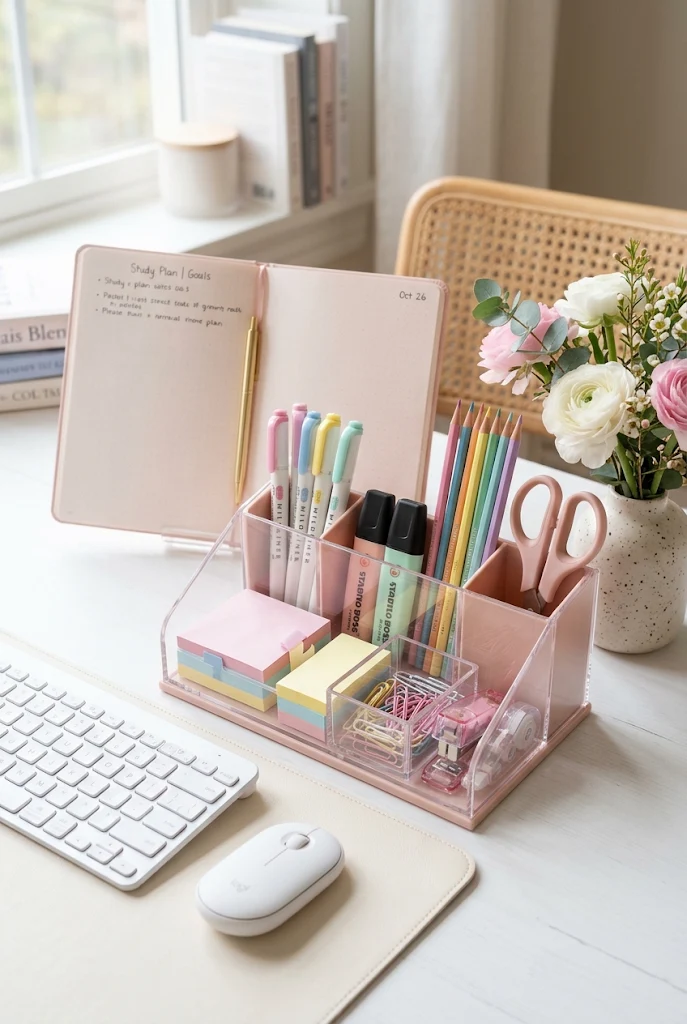
Pens, highlighters, sticky notes and paper clips can quickly make your desk look messy.
Instead of keeping everything scattered around, use a compact desk organizer.
Choose a wooden, acrylic, white or fabric organizer that matches your setup.
Keep only the stationery you regularly use on your desk.
How to recreate it:
- Use separate sections for pens and pencils.
- Keep sticky notes in a small holder.
- Store extra stationery in a drawer.
- Avoid filling every compartment with unnecessary items.
7. Create a Small Bookshelf or Floating Shelf Above Your Desk
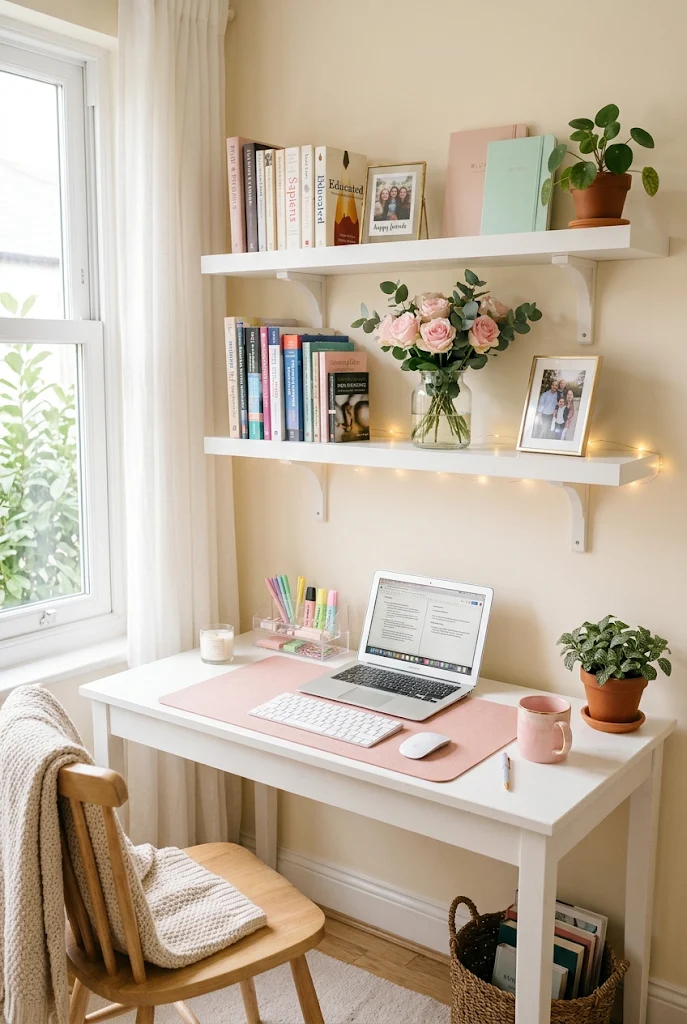
If your desk doesn’t have enough storage, look at the wall above it.
A floating shelf or narrow bookshelf can provide extra space without taking up valuable floor area.
Use it for textbooks, notebooks, a small plant and a few decorative accessories.
Keep heavier books on sturdy, properly installed shelves.
How to recreate it:
- Install one or two shelves above your desk.
- Arrange frequently used books within easy reach.
- Keep decorative objects limited.
- Leave some empty space so the shelf doesn’t look crowded.
8. Make a Study Wall With a Pinboard or Pegboard
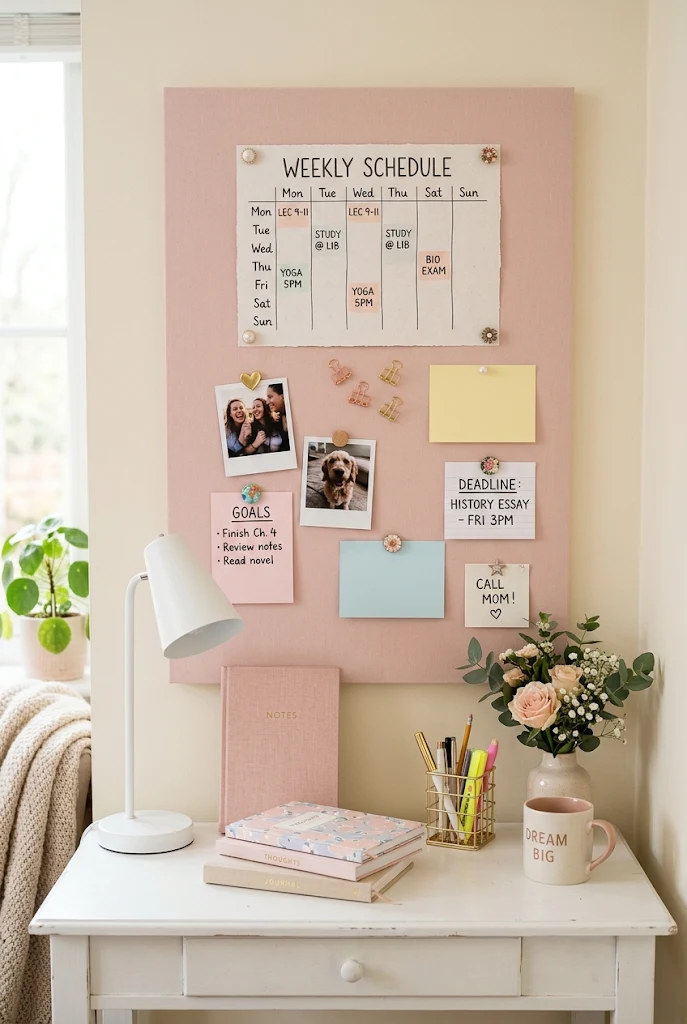
An empty wall can become a useful part of your study corner.
A corkboard, fabric pinboard or pegboard gives you a place to organize important information.
You can display your weekly timetable, assignment deadlines, reminders and study goals.
It also adds personality without taking up desk space.
How to recreate it:
- Place a pinboard above or beside your desk.
- Add a weekly study schedule.
- Pin important reminders and notes.
- Use small clips to organize loose papers.
Don’t fill the entire board with random pictures. Keep it useful and visually balanced.
9. Keep Your Books Organized by Subject
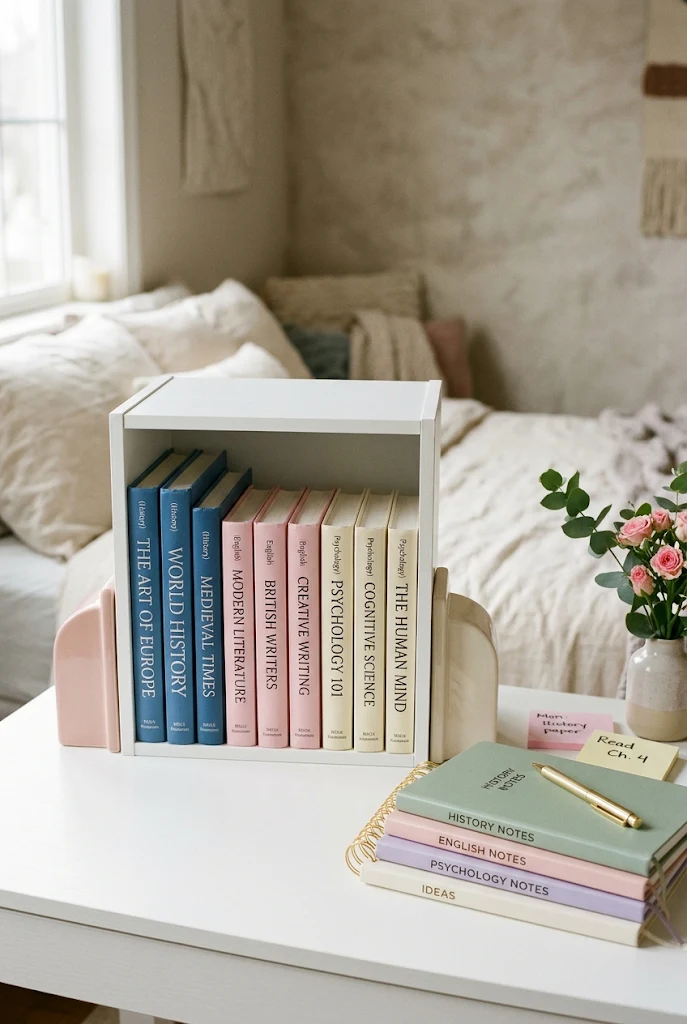
When books are scattered everywhere, finding the right one becomes another distraction.
Create a simple book arrangement based on your subjects or daily study routine.
Use vertical bookends to keep textbooks upright and prevent them from falling over.
If you have limited space, use a small desktop bookshelf or one floating shelf.
How to recreate it:
- Group books according to subjects.
- Keep current textbooks within reach.
- Place rarely used books on higher shelves.
- Use simple labels if you have several notebooks.
10. Add a Small Plant for a Fresh, Natural Touch
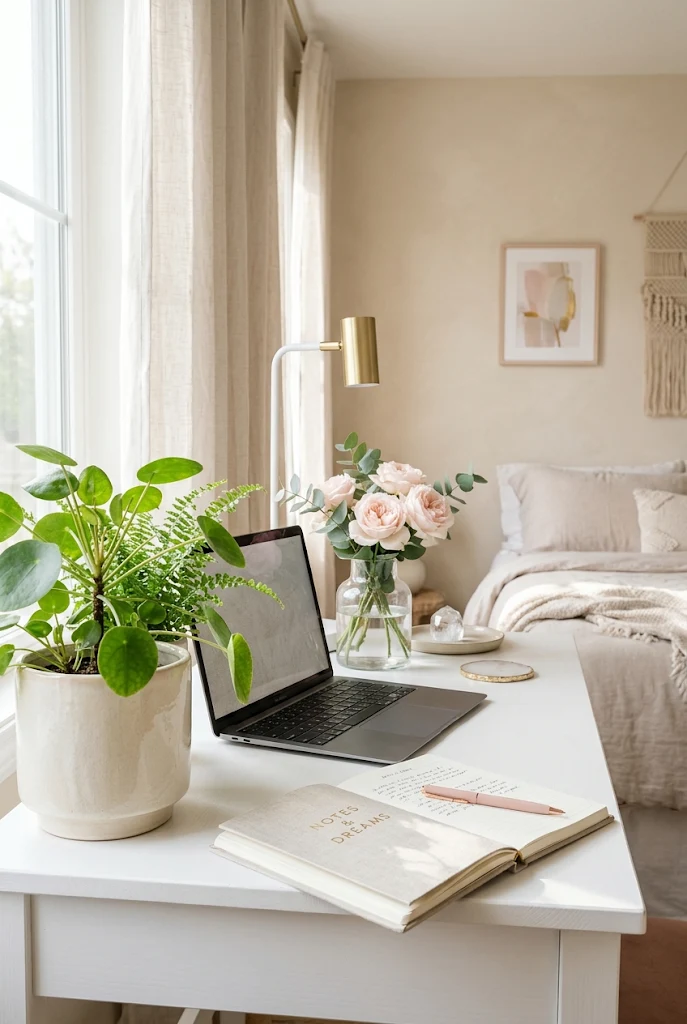
A little greenery can make a study corner feel less plain.
You don’t need a large indoor plant. A small low-maintenance plant on your desk or shelf is enough.
Choose a compact plant that suits your available light and care routine.
If you don’t have time to maintain plants, a good-quality artificial plant is another option.
How to recreate it:
- Place one small plant near the corner of your desk.
- Use a ceramic or neutral-colored planter.
- Avoid placing it where it blocks your working area.
- Choose a plant suitable for your room’s lighting conditions.
11. Add a Desk Mat to Make Your Workspace Look Complete

Sometimes, a desk feels unfinished even when everything is organized.
A desk mat can bring the different elements together and create a more polished appearance.
Choose a neutral, leather-look, fabric or pastel desk mat depending on your style.
It also provides a defined surface for your laptop, notebook and everyday accessories.
How to recreate it:
- Choose a mat that covers your main working area.
- Match it with your desk and chair.
- Avoid overly busy patterns.
- Keep enough room for writing and using your laptop.
12. Create a Small Charging and Cable Management Station
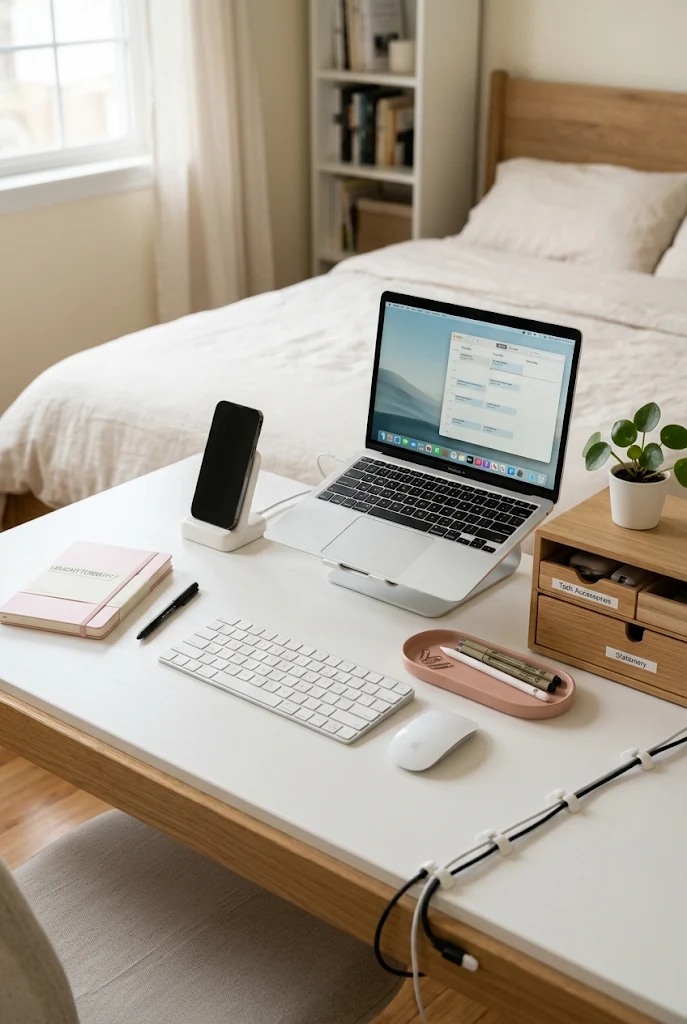
Loose charging cables can make even the prettiest desk look untidy.
Instead of letting cables hang around your workspace, create a small charging station.
Use cable clips, reusable cable ties or an under-desk cable tray to keep everything organized.
Keep chargers away from liquids and avoid overloading electrical outlets.
How to recreate it:
- Use cable clips along the back of your desk.
- Group charging cables together.
- Keep extension boards safely positioned.
- Leave only the cables you regularly need.
13. Add a Small Drawer or Storage Basket for Hidden Clutter
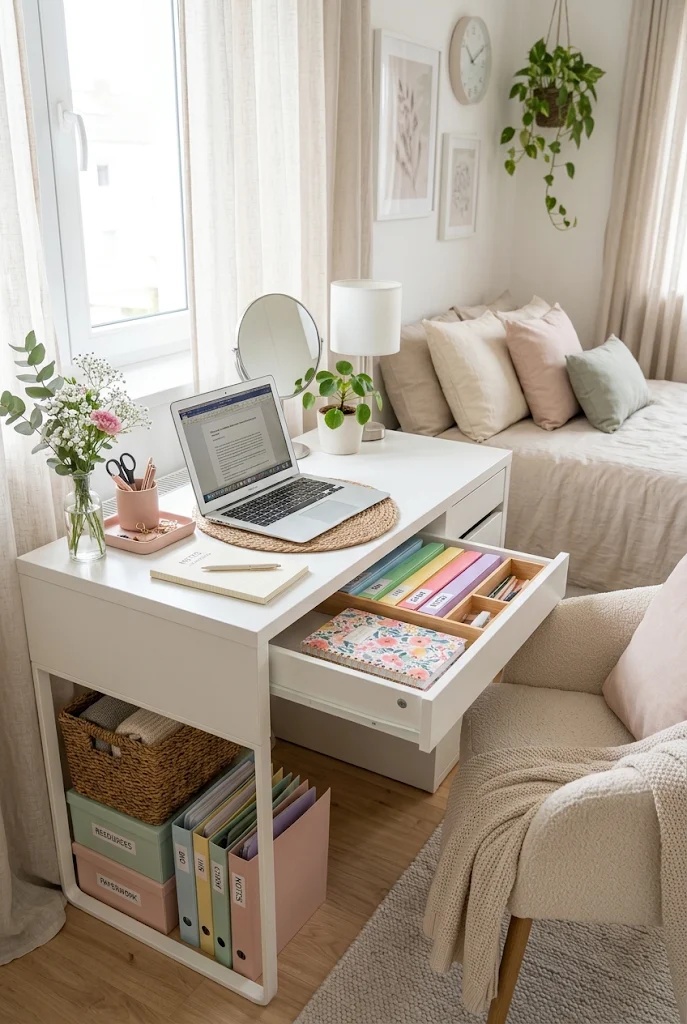
Not everything needs to be displayed.
Extra notebooks, chargers, documents and stationery can make your desk look crowded if they don’t have a proper place.
A small drawer unit, storage basket or box can help you hide these items while keeping them accessible.
This is especially helpful when you’re creating a study corner in a small bedroom.
How to recreate it:
- Use a small drawer unit beside your desk.
- Keep extra stationery in labeled boxes.
- Store important papers in folders.
- Separate everyday supplies from occasional-use items.
14. Personalize Your Corner With a Few Aesthetic Details
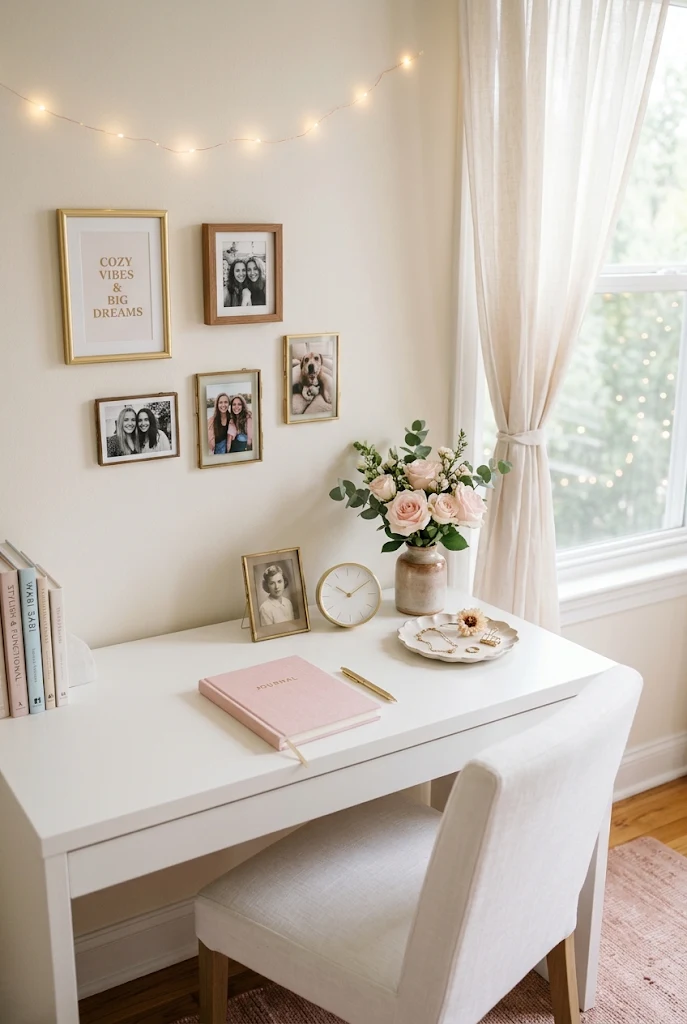
Now comes the fun part: making your study corner feel like your own space.
Add a few personal details that make you happy to sit down and study.
You could use a small framed print, a minimalist clock, a favorite quote, a decorative tray or a simple photo display.
Just remember that your desk is still a workspace, not a display shelf.
How to recreate it:
- Add one or two small decorative pieces.
- Use a matching frame or photo holder.
- Choose decor that complements your color palette.
- Keep the main working area clear.
15. Finish With a Simple Daily Reset Routine
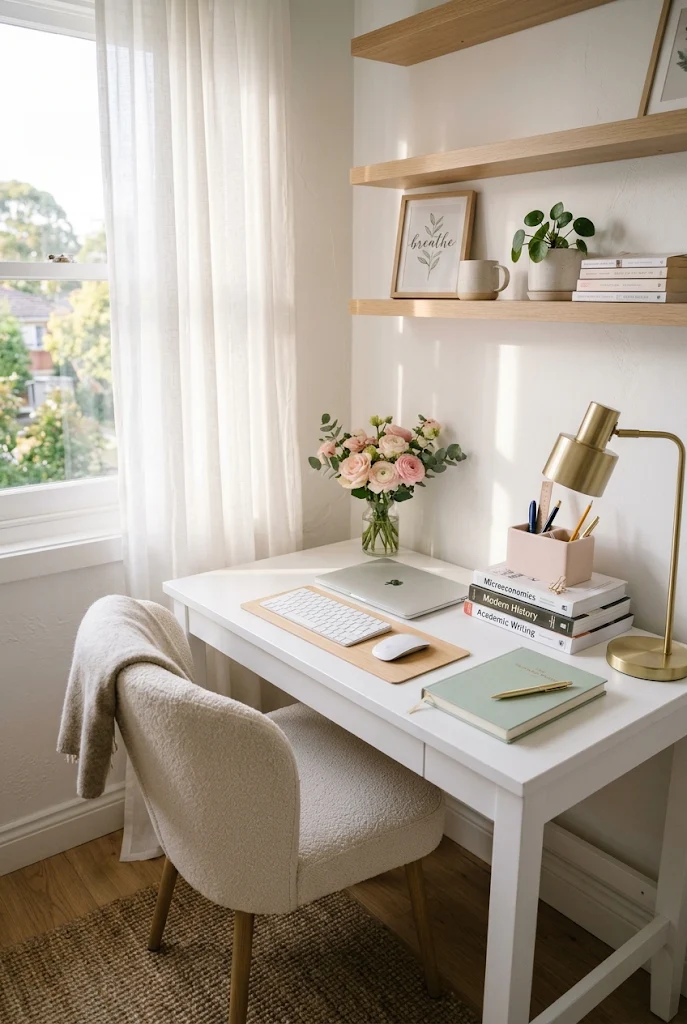
Your study corner can look beautiful on the first day and messy again by the end of the week.
That’s why the final step isn’t another decoration. It’s creating a simple routine to maintain your setup.
Before finishing your study session, spend a few minutes putting everything back in its place.
This makes it easier to start your next session without cleaning the entire desk first.
Your 5-minute desk reset:
- Return books to their shelves.
- Put pens and stationery back in the organizer.
- Remove empty cups and unnecessary papers.
- Arrange your laptop and notebooks.
- Prepare the materials you’ll need for your next study session.
A clean setup doesn’t have to stay perfect all day. It just needs to be easy to reset.
Small Study Corner? Try These Space-Saving Ideas
You don’t need a separate study room to make this setup work.
If you’re working with a small bedroom, these ideas can help you use your available space more efficiently.
| Space problem | Smart solution |
|---|---|
| No room for a large desk | Choose a compact writing desk |
| Too many books | Add floating shelves |
| Limited drawer space | Use stackable storage boxes |
| Small desktop | Use a wall-mounted organizer |
| No room for a bookshelf | Try vertical book storage |
| Too many cables | Add cable clips and a cable tray |
| Shared bedroom | Create a defined study zone |
Common Study Corner Mistakes to Avoid
Even a beautiful setup can become difficult to use if you make these common mistakes.
- Buying decor before essentials: Choose your desk, chair and lighting first.
- Overcrowding the desk: Keep only everyday essentials within reach.
- Ignoring chair comfort: A pretty chair isn’t useful if it doesn’t support you.
- Using poor lighting: Make sure your workspace is properly illuminated.
- Choosing a desk that’s too large: Measure your available space before buying furniture.
- Keeping everything visible: Use drawers and baskets for extra supplies.
- Copying someone else’s setup completely: Adapt the ideas to your room, budget and study habits.
Conclusion
Creating a study corner that helps you focus doesn’t require an expensive makeover or a perfectly designed room.
Start with a comfortable desk, a supportive chair and good lighting. Then add smart storage, organize your books and introduce a few decorative details that reflect your personal style.
Most importantly, keep your setup practical and easy to maintain.
Your study corner should be a place where you feel comfortable sitting down, opening your books and getting things done.
Sometimes, a few thoughtful changes are all you need to turn an unused corner into your favorite place to study.
Categories: Home Decor



Leave a Reply