
Your cart is currently empty!
INTRODUCTION:
Trying to fit a study desk into a tiny room can feel like playing Tetris with furniture. You need a desk, a bed, storage, a chair—and somehow you’re also supposed to have enough space to walk around.
But here’s the thing: you don’t necessarily need a smaller desk. You need a smarter place for it.
That empty corner? Potential desk space.
The wall beside your bed? Potential desk space.
That awkward gap between furniture? Yep, that too.
So before you give up and start doing homework on your bed again, here are 10 clever small-space study desk ideas that make studying easier without making your room feel cramped.
1. The Floating Desk Between the Bed & Wall
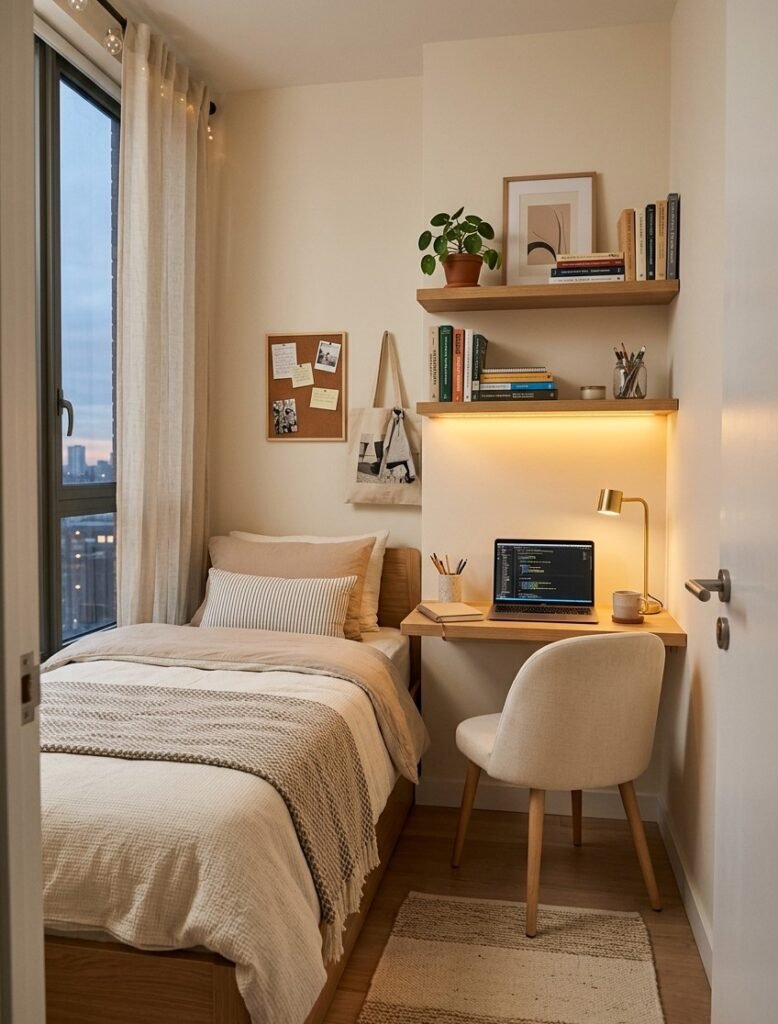
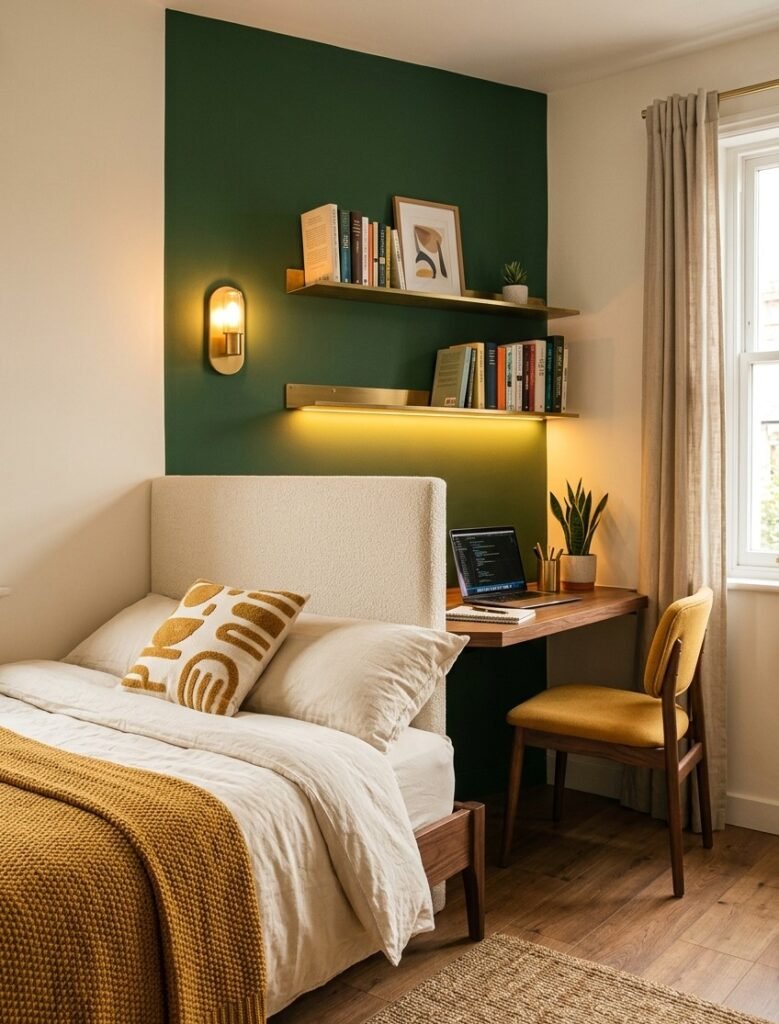
That narrow space beside your bed might be more useful than it looks. Instead of squeezing a traditional desk into the room, install a slim floating desk directly onto the wall.
Because there are no bulky legs underneath, the floor stays open and the room feels less crowded.
A desk around 90–110 cm wide can be enough for a laptop, notebook, pencil holder, small plant, and a few everyday study essentials.
Make the wall work harder
Add two floating shelves above the desk for:
- Textbooks
- Small storage baskets
- Stationery
- Framed artwork
- A tiny plant
Then place a warm LED strip underneath the shelves.
2. Turn That Awkward Little Wall Space Into a Study Nook
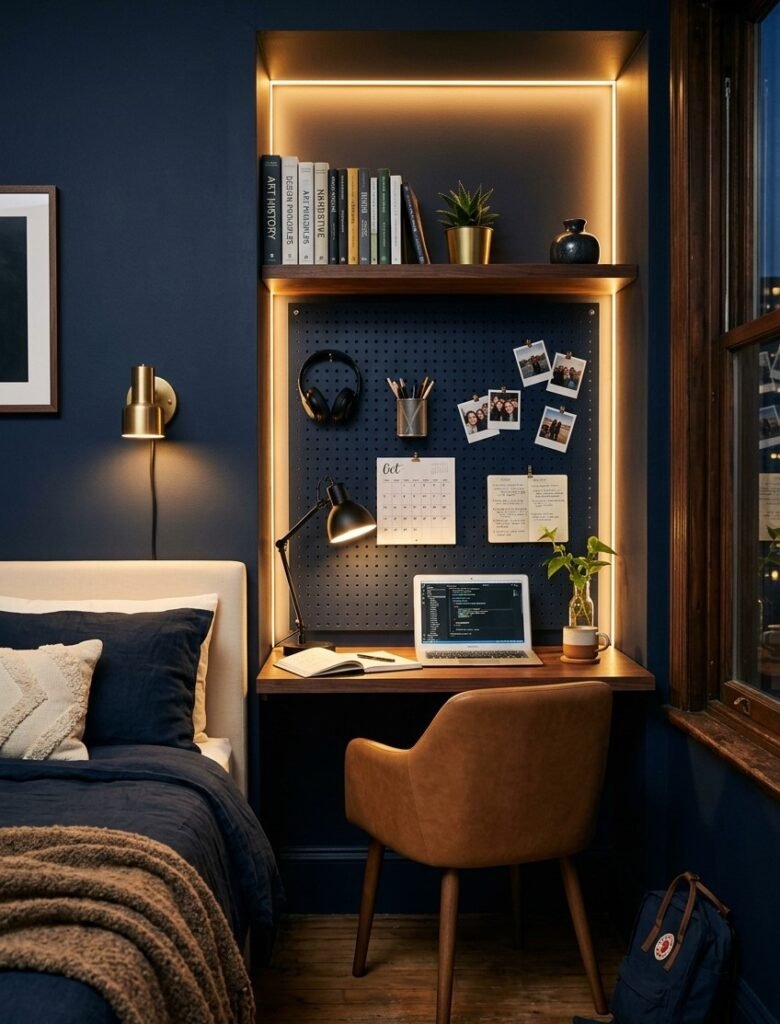
Some rooms have that weird recessed area that seems too small for a wardrobe but too big to completely ignore. That’s actually perfect for a study nook.
Instead of trying to fit a regular desk into the space, use a slim tabletop that fits the width of the recessed area.
Then use the walls around it for organization.
A pegboard can hold headphones, stationery and notes, while a narrow shelf above can store books.
Add warm LED lighting around the inside edge and the once-useless space suddenly looks intentional.
The trick?
Don’t fight the shape of the room.
Use it.
You can recreate this setup with an inexpensive tabletop, brackets, and simple organizers instead of paying for expensive custom furniture.
3. Turn the Window Area Into a Study Spot
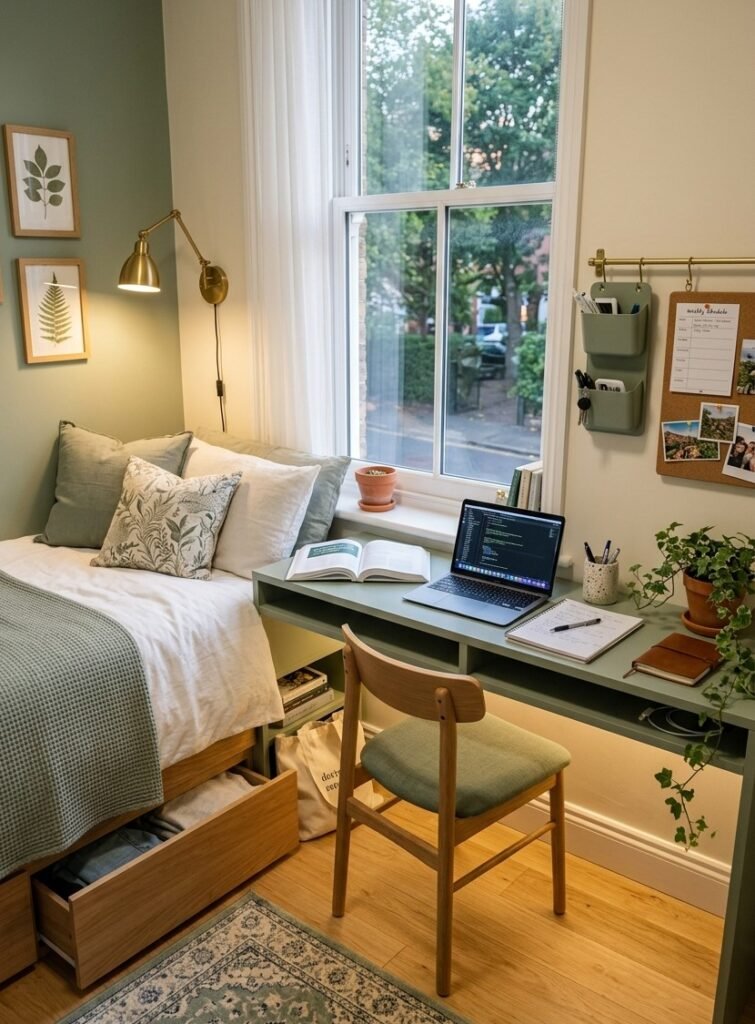
The space beside a bed and underneath a window is often overlooked, but it can make a perfect study zone. Here, a slim desk runs along the wall and continues toward the window, giving plenty of room for a laptop, books, notebooks, and a few everyday essentials.
The window also brings in natural daylight, making the area feel brighter and more open during the day.
4. Squeeze a Desk Into That Tiny Gap
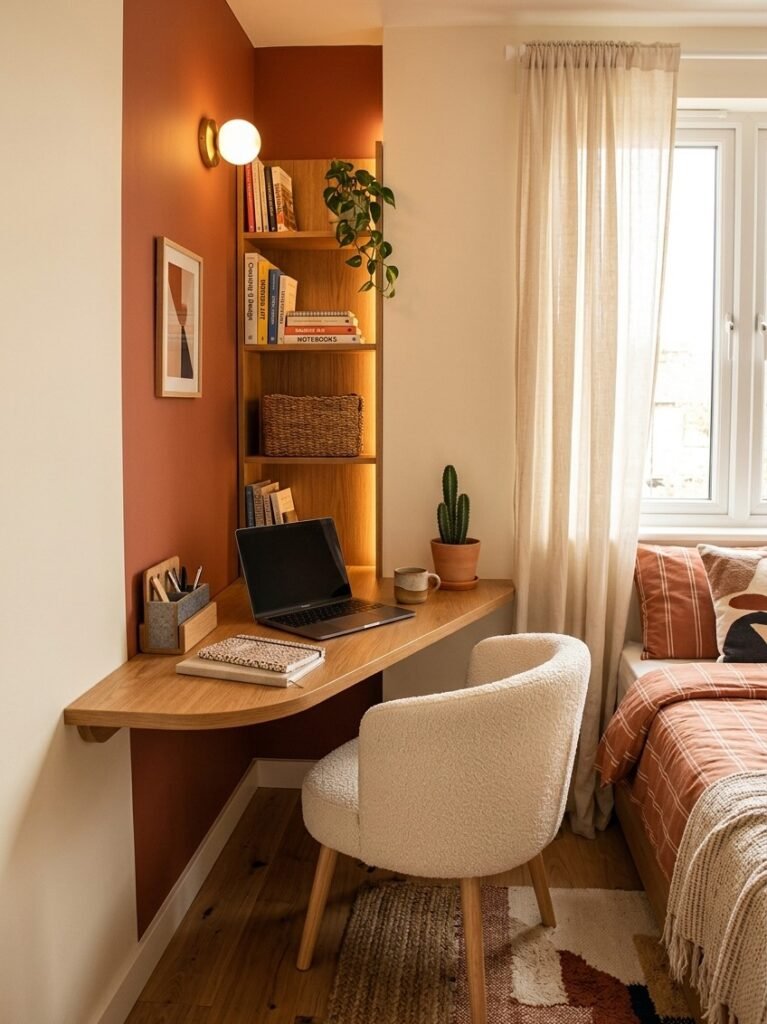
Here’s a space-saving trick that’s easy to overlook:
Check the gaps between your furniture. Maybe there’s a narrow strip of space between your wardrobe and bed. If there’s enough room to move comfortably, a very slim desk could fit there.
You don’t need a massive desktop for everyday studying. A small surface can hold your laptop, notebook, headphones, pen holder and a compact lamp.
5. Turn a Bookshelf Into Your Desk
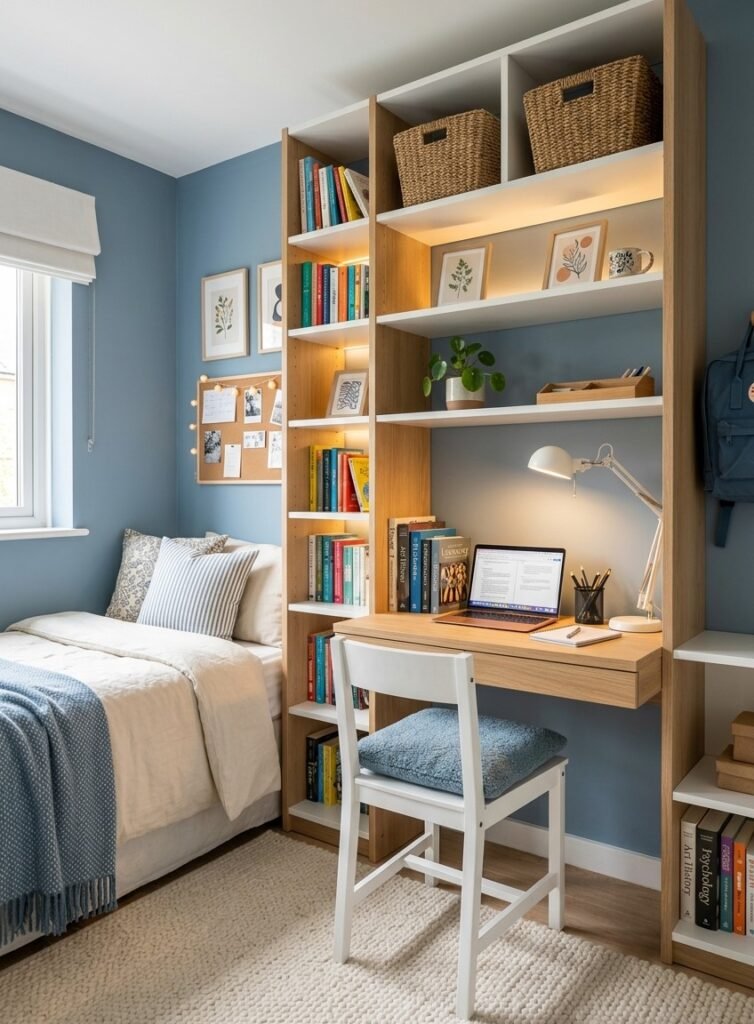
Need more storage and a study desk? Here’s where you can combine the two. Instead of having a separate bookshelf and desk, create a shelving unit with an open section in the middle. That empty section becomes your desk.
Books go above you, Storage boxes go beside you, Your chair slides underneath.
Done.
Why this is such a good tiny-room solution
You’re using vertical space instead of valuable floor space.
Look for modular shelving, cube organizers, or simple shelving units that can be combined with a tabletop. Try dusty blue, warm white and light wood if you want something calm but still more interesting than an all-white room.
6. Use a Fold-Down Desk That Disappears
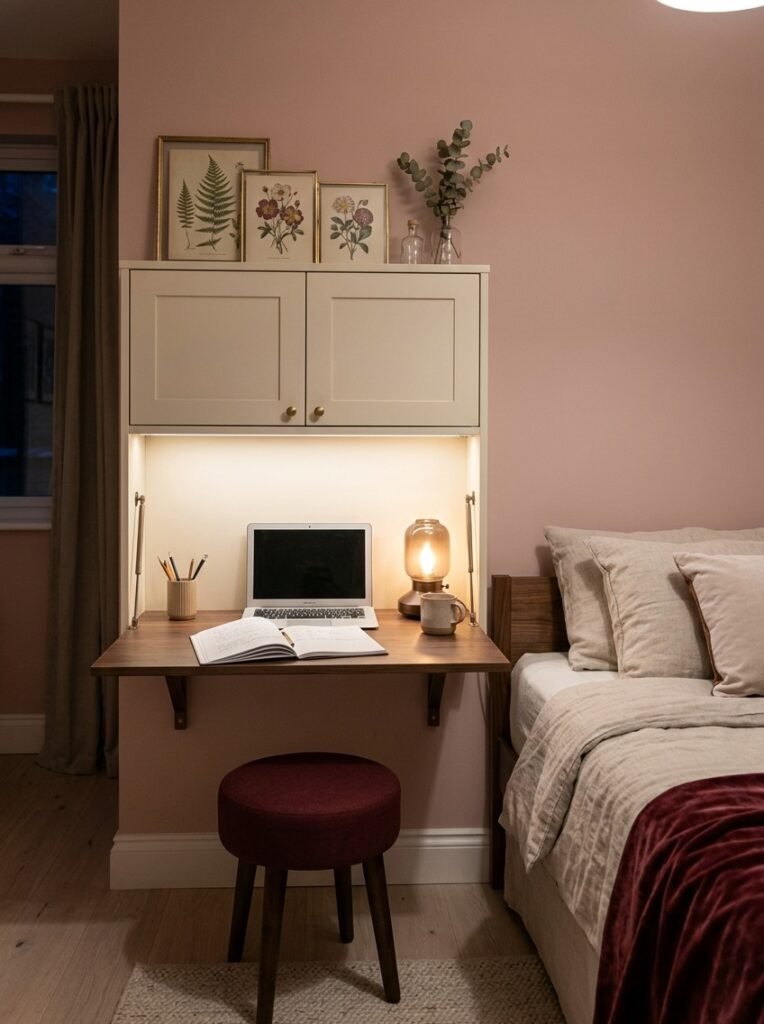
If your room is seriously short on space, you might need a desk that knows when to leave.
Enter the fold-down desk. Open it when it’s time to study and close it when you’re done.
Suddenly, your floor is yours again. Choose a wall-mounted version with storage above or behind it for notebooks, stationery, chargers and other small items.
Make it part of the decor
A fold-down desk doesn’t have to look like office furniture.
Try a blush-pink wall, walnut surface, brass hardware and a warm LED strip underneath the cabinet. When everything is folded away, the wall can look like a normal decorative part of the bedroom.
7. Turn Under the Stairs Into Your Secret Study Spot
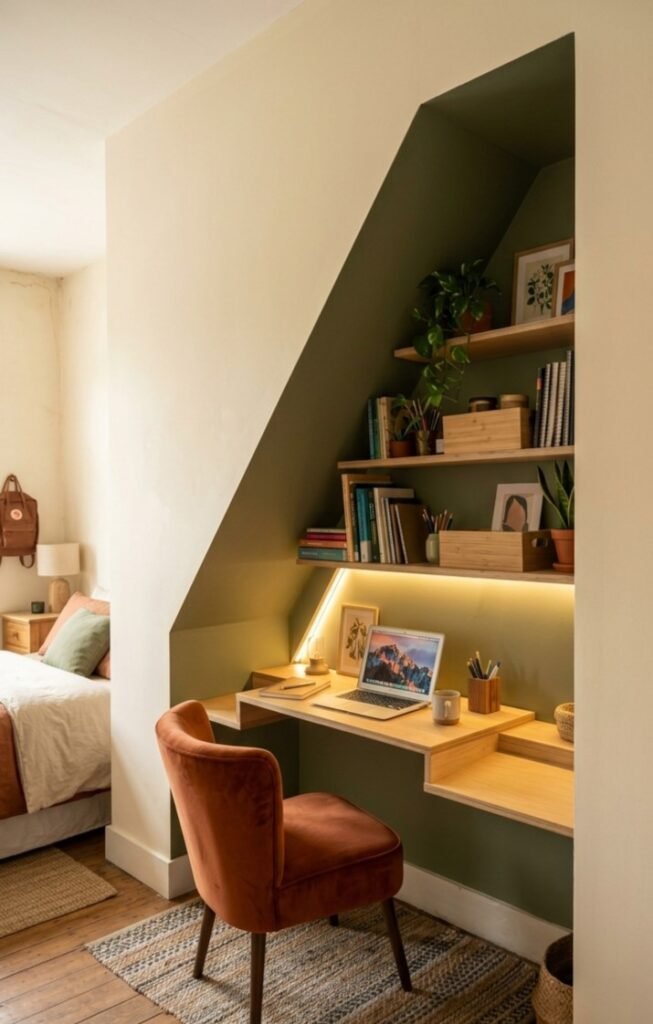
Have an empty space underneath your stairs? Don’t automatically label it “useless.”
That strange triangular shape can actually make a surprisingly cozy study nook. Use a narrow desk that follows the wall underneath the stairs. Then install shelves that follow the slope above it. Now you’ve turned one awkward space into:
A desk + bookshelf + storage area + study zone.
Add warm LED lighting underneath the shelves to make the nook feel cozy in the evening.
The best part?
You’re not trying to hide the unusual shape.
You’re making it the feature.
8. Use a Mirror to Make Your Study Area Feel Bigger
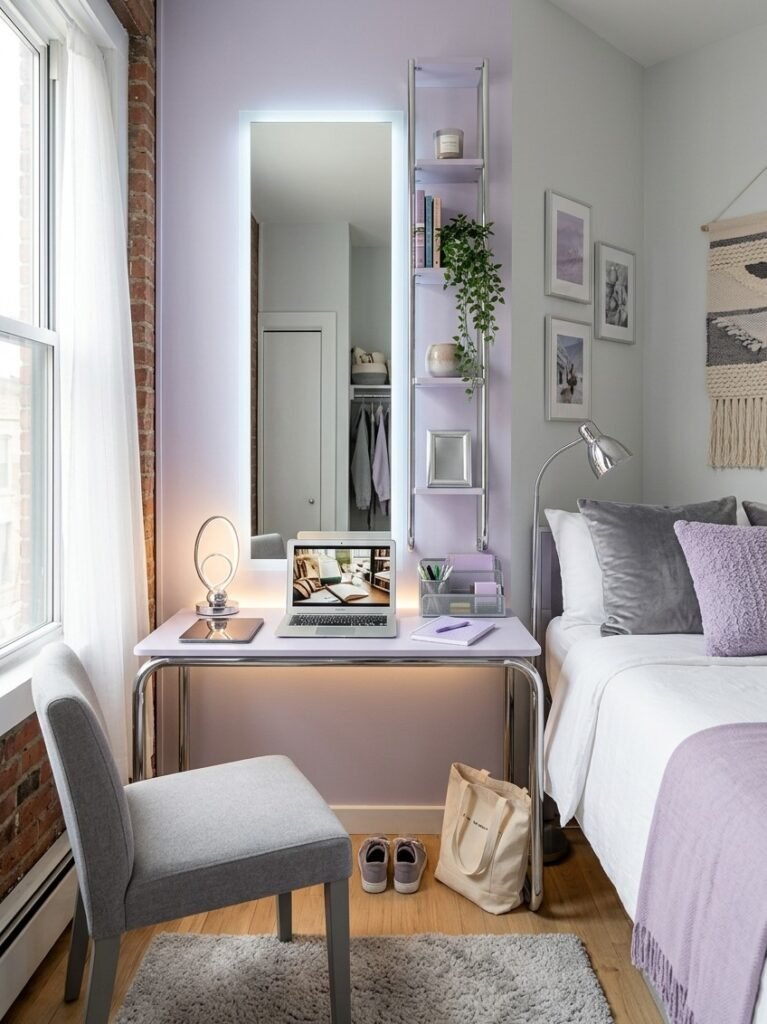
A desk can make a small room feel even smaller.
So here’s a visual trick:
Add a mirror.
Place a tall, narrow mirror beside or above your compact desk. The desk itself can stay simple—a slim console-style surface with enough room for your laptop and notebook.
Then add a narrow shelving unit beside the mirror for books and supplies.
Add some subtle lighting
A warm LED strip behind the mirror can create a soft glow around the study area. It also makes the space feel more layered without filling your desktop with lamps and decorations.
Try lavender, soft gray, chrome and warm white for a modern look.
9. Hide the Desk Behind Your Bed
Here’s a setup that can completely change how your room is organized:
Put the desk behind the bed.
If your layout allows it, move the bed slightly away from the wall and place a narrow desk behind it. The headboard creates a natural divider between your sleeping and studying areas.
From the entrance, the desk may barely be visible.
Walk around the bed and—surprise—there’s your study space.
10. Make the Space Beside Your Bed work
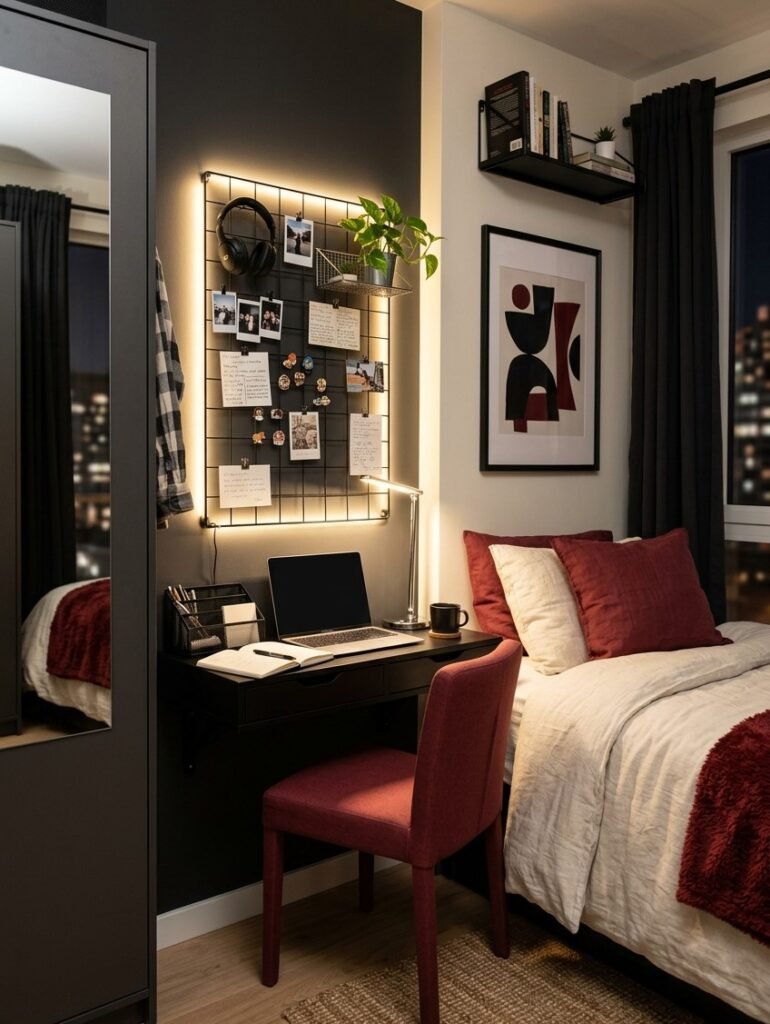
That narrow area beside your bed can easily become a useful study zone. Instead of leaving it as empty floor space, place a compact desk directly against the wall.
A dark desk works especially well here because it creates a defined study area without needing a large piece of furniture. Keep the desktop simple with just the essentials—your laptop, notebook, pen holder, and a small lamp.
The goal is simple: everything you need to study, without filling every inch of the desk.
Final Thoughts
A small bedroom can still have a study space that feels comfortable, organized, and stylish. This setup proves that you don’t need a large room or oversized desk—you just need to use the available space intelligently.
By placing a slim desk beside the bed, using the wall for organization, adding warm lighting, and choosing furniture with built-in storage, you can create a workspace without making the bedroom feel crowded.
Categories: Home Decor

Leave a Reply