
Your cart is currently empty!
Introduction
Standing in the baby care aisle staring at twenty near-identical bottles is a rite of passage for new parents. They all say things like “gentle,” “natural,” and “tear-free.” Most have a smiling baby on the label. And almost none of them make it easy to figure out what’s actually inside.
Here’s the truth: not all baby shampoos are created equal, and “baby” on the label doesn’t automatically mean safe or gentle. Some mainstream formulas contain sulfates, synthetic fragrances, parabens, and even formaldehyde-releasing preservatives — ingredients that dermatologists and pediatricians actively recommend avoiding on newborn and infant skin.
This guide gives you a clear, expert-backed framework for choosing the best baby shampoo. You’ll learn exactly which ingredients to look for, which ones to avoid, what certifications and label claims actually mean, and how to find the right formula for your baby’s specific skin needs.
Why Baby Shampoo Is Different — And Why It Matters
A baby’s skin is fundamentally different from an adult’s. Newborn skin is thinner, more permeable, and far more sensitive to irritants and allergens — meaning what goes on the surface can absorb more readily and cause more pronounced reactions than it would on adult skin.
The American Academy of Dermatology (AAD) recommends washing baby hair only once or twice a week with a mild shampoo. The goal is to cleanse without stripping the natural oils that protect the scalp and skin barrier. Overuse of even gentle products — and definitely of harsh ones — can contribute to dryness, cradle cap, and irritation.
Board-certified dermatologist Dr. Viktoryia Kazlouskaya puts it simply: the simpler the ingredient list, the better. That single principle is the foundation of everything that follows.
How to Read a Baby Shampoo Label: The 5-Step System
Before diving into specific ingredients, here’s a fast system you can use in any store or while shopping online:
- Flip the bottle — ignore the front label entirely and go straight to the ingredient list on the back
- Scan the first five ingredients — these make up the bulk of the formula; if you see anything concerning in the first five, put it back
- Check for keywords — look for “sulfate-free,” “paraben-free,” and “fragrance-free” as baseline filters
- Watch for long, complex chemical names — these often disguise harsh or unnecessary ingredients
- Look for certifications — EWG Verified, National Eczema Association seal, or USDA Biobased are meaningful third-party validations
The front label is marketing. The ingredient list is truth. Getting comfortable flipping the bottle first is the single most useful habit a parent can build when shopping for baby products.
Ingredients to Look For: The Safe List
Gentle Surfactants (Cleansing Agents)
Every shampoo needs a surfactant — a cleansing agent that removes dirt, oil, and buildup. For babies, the specific surfactant matters enormously. Dermatologist Dr. Castilla recommends specifically seeking shampoos with decyl glucoside or coco-glucoside — both derived from coconut oil and glucose, respectively. These are gentler surfactants that are less likely to strip the skin of essential nutrients or disrupt the scalp’s natural moisture balance.
Other safe gentle surfactants to look for:
- Cocamidopropyl betaine — a mild coconut-derived cleanser widely used in baby-safe formulas
- Sodium cocoyl isethionate — another coconut-derived option, very gentle and non-stripping
- Disodium cocoyl glutamate — amino acid-derived, one of the mildest options available
If you see any of these in the first five ingredients, that’s a good sign.
Moisturizing Ingredients
Because baby shampoos should cleanse without drying, look for hydrating ingredients that work alongside the surfactants:
- Glycerin — a gentle humectant that draws moisture into skin and hair; one of the safest and most effective ingredients for baby formulas
- Hyaluronic acid — holds moisture in the skin barrier; increasingly found in premium baby shampoos
- Provitamin B5 (panthenol) — conditions hair and scalp while supporting moisture retention; found in both Aquaphor Baby and Burt’s Bees formulas
- Aloe vera — soothing and hydrating; appropriate for sensitive skin when properly processed
Barrier-Supporting Ingredients
For babies with eczema-prone or very sensitive skin, barrier-supporting ingredients are a meaningful upgrade:
- Ceramides (specifically ceramides 1, 3, and 6–11) — essential lipids that strengthen and repair the skin barrier; look for formulas that include multiple ceramide types for best results
- Squalane — a lightweight plant-derived oil that mimics the skin’s natural sebum; excellent for dry or compromised skin
- Oat extract (colloidal oatmeal) — clinically recognized as a skin protectant; soothes itching and dryness associated with eczema; Aveeno Baby uses this as a key ingredient and is frequently recommended by pediatricians for dry or eczema-prone skin
Natural Soothing Ingredients
- Chamomile essence — gently soothing; found in Aquaphor Baby Wash
- Marshmallow root extract — a plant-based emollient with soothing properties for sensitive skin
- Calendula extract — widely used in gentle baby formulas for its skin-calming properties
Ingredients to Avoid: The Red Flag List

Sulfates — SLS and SLES
Sodium Lauryl Sulfate (SLS) and Sodium Laureth Sulfate (SLES) are the foaming agents that create the rich lather most adults expect from a shampoo. They’re effective cleansers — but they work by stripping oils from the hair and scalp, which is exactly what you don’t want on a baby.
SLS in particular can be quite drying and irritating on sensitive skin. While it’s less commonly found in products marketed specifically for babies, it still appears in some formulas. SLES is milder but still worth avoiding on very sensitive or eczema-prone skin. Look specifically for “sulfate-free” on the label, and verify it in the ingredient list.
Synthetic Fragrances
The word “fragrance” or “parfum” on an ingredient list is one of the most significant red flags in baby shampoo. That single word can legally mask dozens of individual chemical compounds — including phthalates, which are known irritants that can cause skin reactions and are linked to hormone disruption.
Dermatologist Dr. Woodruff puts it plainly: fragrances and botanicals are one of the most problematic ingredient categories in skincare products overall, and often cause irritation in children. This is the reason “fragrance-free” is the single most universally recommended label feature by dermatologists for baby products.
Note: “unscented” is not the same as “fragrance-free.” Unscented products may still contain masking fragrances designed to neutralize other ingredient smells. Always look for “fragrance-free” specifically.
Parabens
Parabens (methylparaben, propylparaben, butylparaben) are synthetic preservatives that have been linked to skin irritation and potential hormone disruption in research studies. While the science on their systemic effects continues to evolve, the expert consensus for baby products is clear: avoid them. Most reputable baby shampoo brands have moved to paraben-free formulations, but they still appear in some products, particularly lower-cost options.
Formaldehyde-Releasing Preservatives
These are the sneakiest ingredients on the red flag list because they don’t appear under the name “formaldehyde” — they appear under ingredient names that release formaldehyde slowly over time as a preservative mechanism. Names to watch for:
- DMDM Hydantoin
- Quaternium-15
- Diazolidinyl urea
- Imidazolidinyl urea
- Bronopol (2-bromo-2-nitropropane-1,3-diol)
Formaldehyde is a known skin irritant and allergen — and a probable carcinogen at higher exposures. It has no place in a baby product.
Artificial Dyes and Colors
Synthetic dyes (often listed as FD&C or D&C followed by a color and number) are common triggers for skin irritation and allergic reactions. They serve no functional purpose in a shampoo — they exist purely for appearance. Look for “dye-free” or simply avoid any formula with artificial colorants in the ingredient list.
Drying Alcohols
Not all alcohols are problematic — fatty alcohols like cetyl alcohol and stearyl alcohol are actually moisturizing. The ones to avoid are drying alcohols: isopropyl alcohol, ethanol, and denatured alcohol, which can weaken hair, leave skin brittle, and disrupt the scalp’s natural moisture balance.
Essential Oils
This one surprises many parents who gravitate toward “natural” products. Dr. Castilla specifically warns that essential oils carry a high risk of allergic reactions and rashes on baby skin — lavender, tea tree, eucalyptus, and peppermint in particular are common sensitizers. A product being plant-derived doesn’t automatically make it gentle, and essential oils are one of the clearest examples of that principle.
What Baby Shampoo Labels and Certifications Actually Mean
“Tear-Free”
This is one of the most universally sought features in baby shampoos — and one of the most misunderstood. Tear-free does not mean the formula is gentler or safer overall. It means the pH is calibrated to be less irritating if it contacts the eyes. A tear-free formula can still contain sulfates, synthetic fragrances, or other ingredients worth avoiding. Don’t let “tear-free” substitute for reading the full ingredient list.
“Hypoallergenic”
Hypoallergenic means the formula is free of common allergens and designed to minimize the risk of allergic reactions. It’s a meaningful claim — dermatologists at NBC Select specifically recommend looking for hypoallergenic formulas for baby skin. However, it’s not a regulated term in the US, which means brands can use it without independent verification. Pair it with ingredient list reading rather than relying on it alone.
“Natural” and “Organic”
These are among the least regulated terms in personal care. “Natural” has no legal definition in cosmetics labeling. “Organic” has more regulatory weight when certified by the USDA — look for the USDA Biobased seal for verified organic content. Without that certification, “organic” on a baby shampoo label is primarily marketing.
EWG Verified
The Environmental Working Group’s Verified seal is one of the most meaningful third-party certifications in baby personal care. EWG Verified products must meet strict standards: no ingredients of concern, full transparency in disclosure, and adherence to good manufacturing practices. The EWG’s Skin Deep database also allows you to look up any baby shampoo and see a safety rating based on ingredient analysis — an invaluable free resource for parents.
National Eczema Association (NEA) Seal
The NEA Seal of Acceptance is specifically meaningful for babies with eczema-prone or very sensitive skin. Products bearing this seal have been reviewed by the NEA and determined to be appropriate for use by people with eczema or sensitive skin conditions.
Dermatologist and Pediatrician Tested
These claims indicate the formula has undergone clinical review by relevant medical professionals. They’re meaningful indicators of safety, though “tested” doesn’t always specify what the testing found — “recommended” is a stronger claim than “tested.”
Special Considerations: Matching Shampoo to Your Baby’s Needs
For Newborns (0–3 Months)
Go with the absolute minimum — a fragrance-free, sulfate-free, dye-free formula with a very short ingredient list. Vanicream Free & Clear is a physician-recommended option at this stage: no fragrances, masking fragrances, dyes, parabens, lanolins, preservatives, formaldehyde, or formaldehyde releasers. Simple, clean, and widely available.
For Eczema-Prone Skin
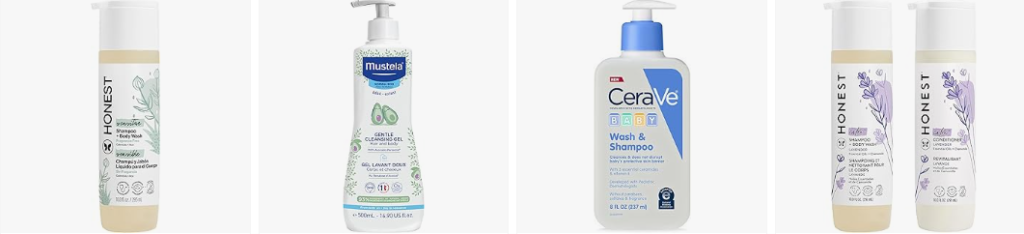
Look for ceramide-containing formulas that actively support the skin barrier alongside cleansing. The CeraVe Baby Wash and Shampoo (ceramides 1, 3, and 6–11 with hyaluronic acid, developed with dermatologists, bearing the NEA seal) is consistently recommended by dermatologists for babies with eczema. Aveeno Baby Wash with colloidal oatmeal is another strong option specifically for dryness and eczema management.
For Cradle Cap
The AAD recommends using a mild baby shampoo while cradle cap is present and loosening scales gently during washing. Look for formulas that are gentle enough for more frequent use — mild surfactants and no stripping sulfates. If cradle cap doesn’t improve, consult your pediatrician before trying stronger products.
For Textured or Curly Hair
Babies with textured or curly hair need extra moisture in their formula. Look for glycerin, shea butter, and coconut-derived conditioning agents alongside gentle surfactants. Avoid anything that strips natural oils — curly hair needs those oils to maintain definition and prevent breakage.
How Often Should You Wash Your Baby’s Hair?
The AAD recommends washing baby hair only once or twice a week for most infants — and Bella Brands’ medical team confirms this, noting that daily washing is unnecessary and can dry out a baby’s scalp and skin. Over-washing, even with gentle products, disrupts the natural oils that protect the scalp. Between washes, a warm water rinse is usually sufficient.
Where to Buy the Best Baby Shampoos
- Amazon — widest selection of dermatologist-recommended brands including CeraVe Baby, Vanicream, Aveeno Baby, and EllaOla; check for the “Amazon’s Choice” or “Climate Pledge Friendly” badges as additional quality signals
- Target — strong baby care aisle with pediatrician-recommended brands; often carries exclusive sizes and bundles
- Walmart — accessible price points on core brands including Aveeno Baby and Aquaphor Baby
- Your pediatrician’s office — Vanicream in particular offers free samples through many pediatric offices; worth asking at your next appointment
- EWG’s Skin Deep database (ewg.org/skindeep) — free tool to verify the safety rating of any baby shampoo before buying
Quick Reference: Baby Shampoo Ingredient Checklist
✅ Look for:
- Decyl glucoside or coco-glucoside (gentle surfactants)
- Glycerin (moisture)
- Hyaluronic acid (barrier hydration)
- Provitamin B5 / panthenol (conditioning)
- Ceramides 1, 3, 6–11 (barrier support)
- Colloidal oatmeal (eczema soothing)
- Squalane (dry skin)
- EWG Verified or NEA Seal certifications
🚫 Avoid:
- SLS / SLES (stripping sulfates)
- “Fragrance” or “parfum” (hidden chemicals)
- Parabens (preservatives linked to irritation)
- DMDM Hydantoin / Quaternium-15 (formaldehyde releasers)
- Artificial dyes (FD&C or D&C colors)
- Isopropyl alcohol / ethanol (drying alcohols)
- Essential oils (common allergens in babies)
Final Thoughts
Choosing the best baby shampoo doesn’t have to mean spending an hour in the aisle reading labels in a panic. Armed with a clear understanding of what to look for — gentle surfactants like coco-glucoside, moisturizing glycerin and ceramides, EWG or NEA certifications — and what to avoid — sulfates, synthetic fragrance, parabens, and formaldehyde releasers — you can make a confident, informed decision in under two minutes.
The most important principle, as board-certified dermatologist Dr. Kazlouskaya puts it: the simpler the ingredient list, the better. That’s the whole framework in six words.
When in doubt, go fragrance-free. Start simple. And if your baby has specific skin concerns like eczema or very sensitive skin, a quick conversation with your pediatrician before trying new products is always the safest first step.
Have a baby shampoo your family loves — or one you learned the hard way to avoid? Share it in the comments!
Frequently Asked Questions About Baby Shampoo
Q: Is “tear-free” the same as “gentle” or “safe” in baby shampoo?
A: No — tear-free means the pH is calibrated to reduce eye irritation, not that the formula is free of harsh ingredients overall. A tear-free shampoo can still contain sulfates, synthetic fragrances, or parabens. Always read the full ingredient list regardless of front-label claims.
Q: What’s the safest baby shampoo for a newborn?
A: For newborns, dermatologists consistently recommend the simplest possible formula: fragrance-free, sulfate-free, dye-free, and paraben-free with a minimal ingredient list. Vanicream Free & Clear is among the most recommended by pediatricians and dermatologists for very early stages — it contains none of the major irritants and is widely available. Always consult your pediatrician if your newborn shows any signs of skin sensitivity or reaction.
Q: Are natural or organic baby shampoos always safer?
A: Not automatically. “Natural” is an unregulated marketing term in cosmetics — a product can use it freely without any standard being met. Essential oils, for example, are natural but carry a high risk of allergic reactions on baby skin. Look for specific certifications (USDA Biobased, EWG Verified) and read the ingredient list rather than relying on “natural” or “organic” claims on the front label.
Q: How do I know if a baby shampoo is irritating my baby’s skin?
A: Signs of irritation to watch for include redness on the scalp or around the hairline, dry or flaky skin after bathing, unusual fussiness during or after bath time, or visible rash or hives. If irritation persists after switching to a fragrance-free, sulfate-free formula, consult your pediatrician or a board-certified pediatric dermatologist — sometimes the issue may be cradle cap, eczema, or a specific ingredient sensitivity that needs professional guidance.
Categories: Beauty



Leave a Reply